Short answer
The questions that actually separate contractors aren't about experience or references. They're about verifiable specifics: registration number and bond amount, who is physically on your site each day, how change orders are priced, what tolerances they hold, and what the warranty covers in writing. Vague answers to specific questions are the signal.
---
Credentials and legal standing
**1. What is your Washington contractor registration number?**
Every contractor working in Washington must be registered with the Department of Labor and Industries. Get the number, then verify it yourself at L&I's Verify a Contractor tool — don't take a business card as proof.
**2. What is your bond amount, and is it current?**
As of July 1, 2024, Washington requires a **$30,000 bond for general contractors** and **$15,000 for specialty contractors** — up from $12,000 and $6,000, the first increase since 2001. Contractors phase into the new amounts at registration renewal, so check what's actually on file.
**3. Can I see your certificate of liability insurance, sent directly from your insurer?**
Washington requires general liability coverage — historically at least $200,000 public liability and $50,000 property damage, or a $250,000 combined single limit. Ask for the certificate to come from the agent, not from the contractor's email. Confirm current requirements at L&I.
**4. Do you carry workers' compensation for everyone on my site?**
If an uninsured worker is injured on your property, that can become your problem. Ask, and ask whether it covers subcontractors.
**5. Has L&I taken any action against your registration?**
The Verify a Contractor tool shows registration history, lawsuits against the bond, and infractions. Look before you ask, then see whether the answer matches.
Scope, price and contract
**6. Is this estimate itemized, and can you walk me through the lines?**
An itemized estimate lets you adjust one decision instead of the whole project. A lump sum tells you nothing about where the money goes.
**7. What is specifically excluded?**
The exclusions list is more informative than the inclusions. A contractor who has thought carefully about a job can tell you exactly what isn't in it.
**8. What allowances are in this estimate, and what were they based on?**
An allowance is a placeholder — say, $6,000 for tile. If it was set low to make the bid look competitive, you'll pay the difference later. Ask what tile that number actually buys.
**9. Is this fixed price or cost-plus, and what happens to unknowns?**
Both models are legitimate. What matters is that you understand which you're signing and how discovered conditions get handled.
**10. How are change orders priced and approved?**
You want: written, priced before work proceeds, signed by you. Not: "we'll settle up at the end."
**11. What is the payment schedule, and is it tied to milestones?**
Payments should follow completed work. A large deposit before anything happens is worth questioning. Washington law limits certain deposit practices — and a contractor asking for half up front is telling you something about their cash position.
Who actually does the work
**12. Who will be on my site every day, and are they your employees or subcontractors?**
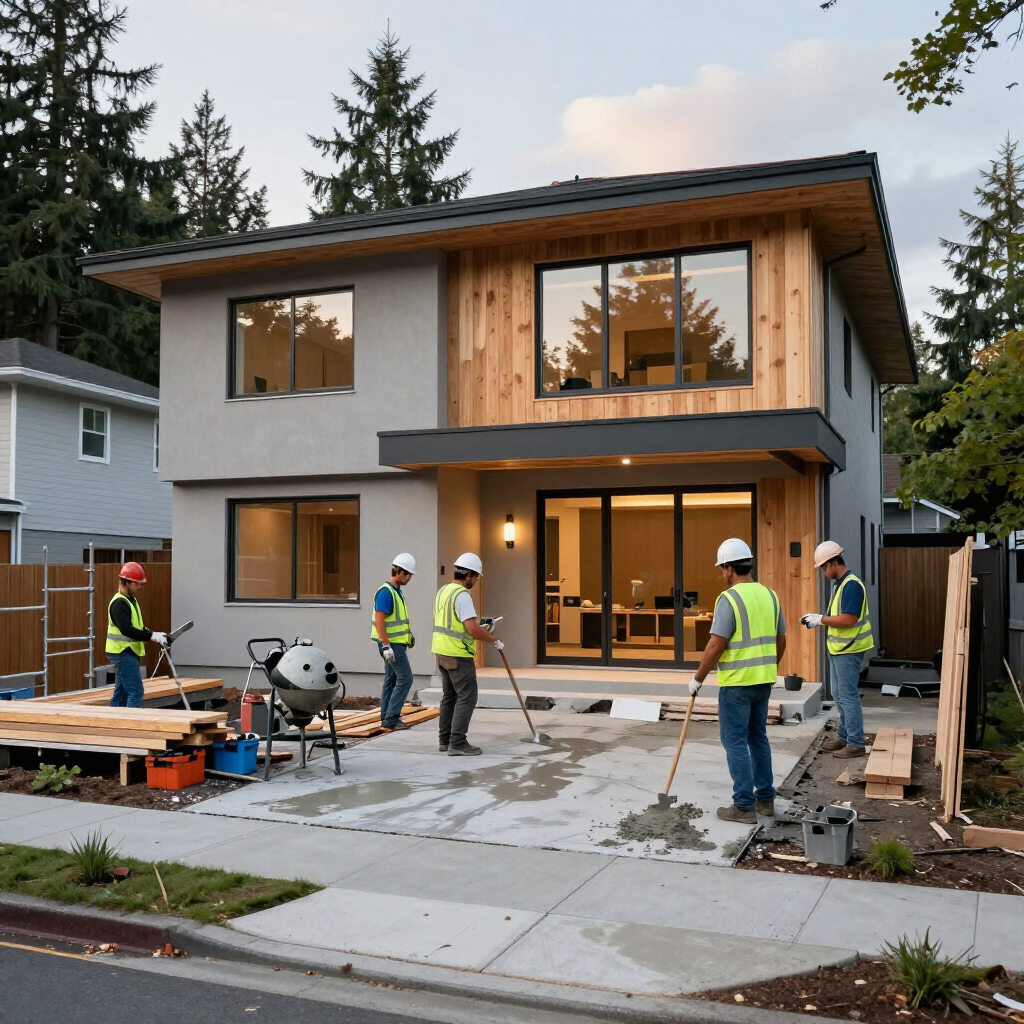
This is the question most likely to change how the project actually goes. A crew of employees who work together every day performs differently from a rotating set of subs, particularly on finish work.
**13. Who is my point of contact, and how often will I hear from them?**
Get a name and a cadence.
**14. How many other jobs will be running at the same time?**
Some overlap is normal. A contractor running six simultaneous projects with one crew is telling you your job will have gaps.
**15. Will you pull the permits?**
The answer should be yes, in their name. A contractor asking *you* to pull an owner-builder permit for work they're performing is shifting liability to you, and it's often a sign of a registration problem.
How they build
**16. What tolerances do you hold, and how do you get there?**
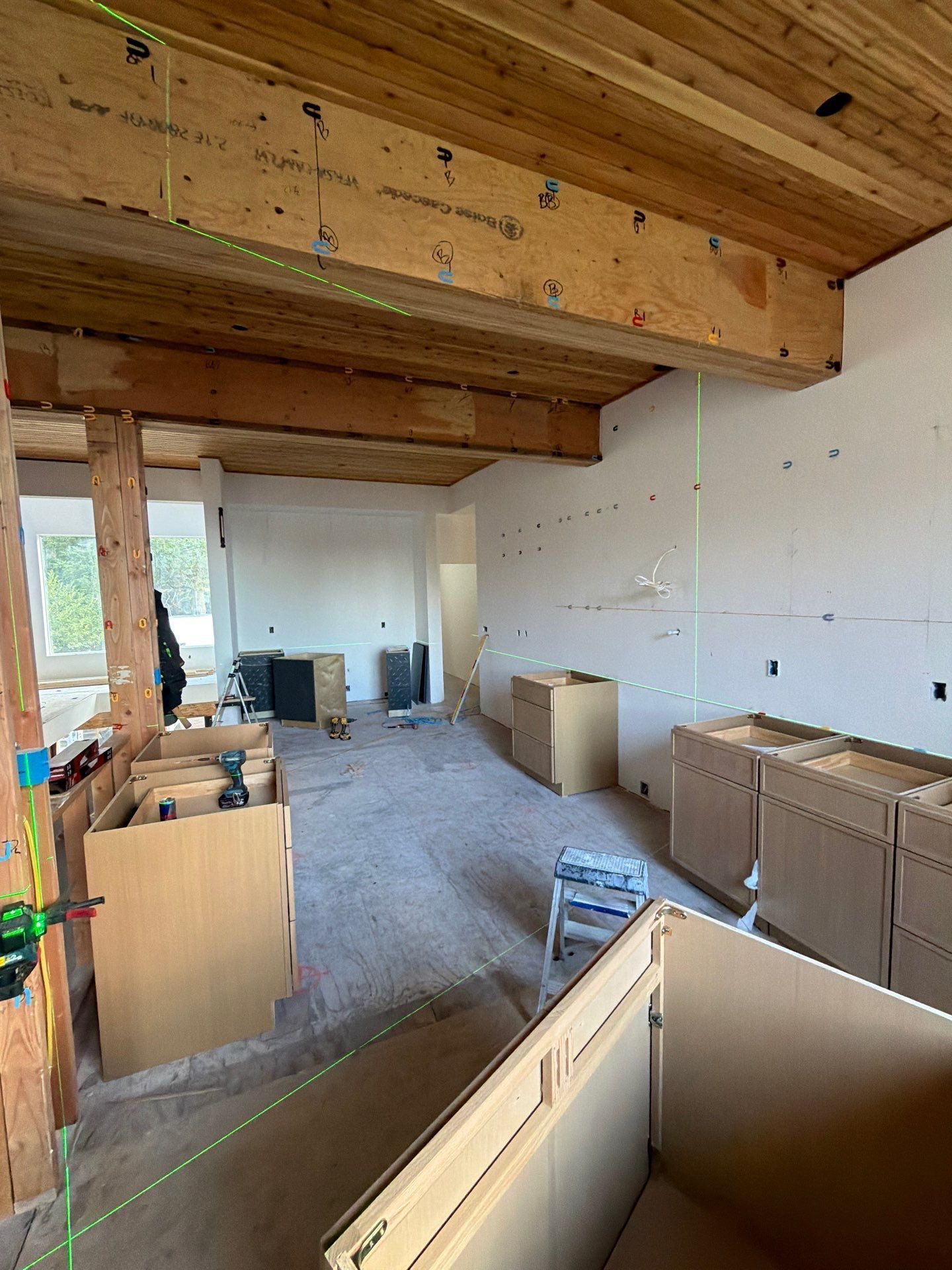
Ask specifically: what flatness do you hold a tile substrate to, and how? The industry standard for tile with any edge 15 inches or longer is no more than 1/8 inch of deviation in 10 feet. The answer should name a method — self-leveler, mortar bed, shimming — not a reassurance.
**17. Do you flood-test shower pans?**
Yes or no. There is no third answer, and it's the single best predictor of whether a tiled shower will still be dry in year five.
**18. What's your dust control, specifically?**
You want to hear: zippered containment at every opening, negative air exhausting outside, HVAC registers sealed, HEPA vacuums. Not "we clean up at the end of the day."
After the job
**19. What does your warranty cover, for how long, and is it in writing?**
Get the document. Ask what's excluded, and ask what the process is for a callback in month eight.
**20. Can I visit a job you finished two years ago, not two months ago?**
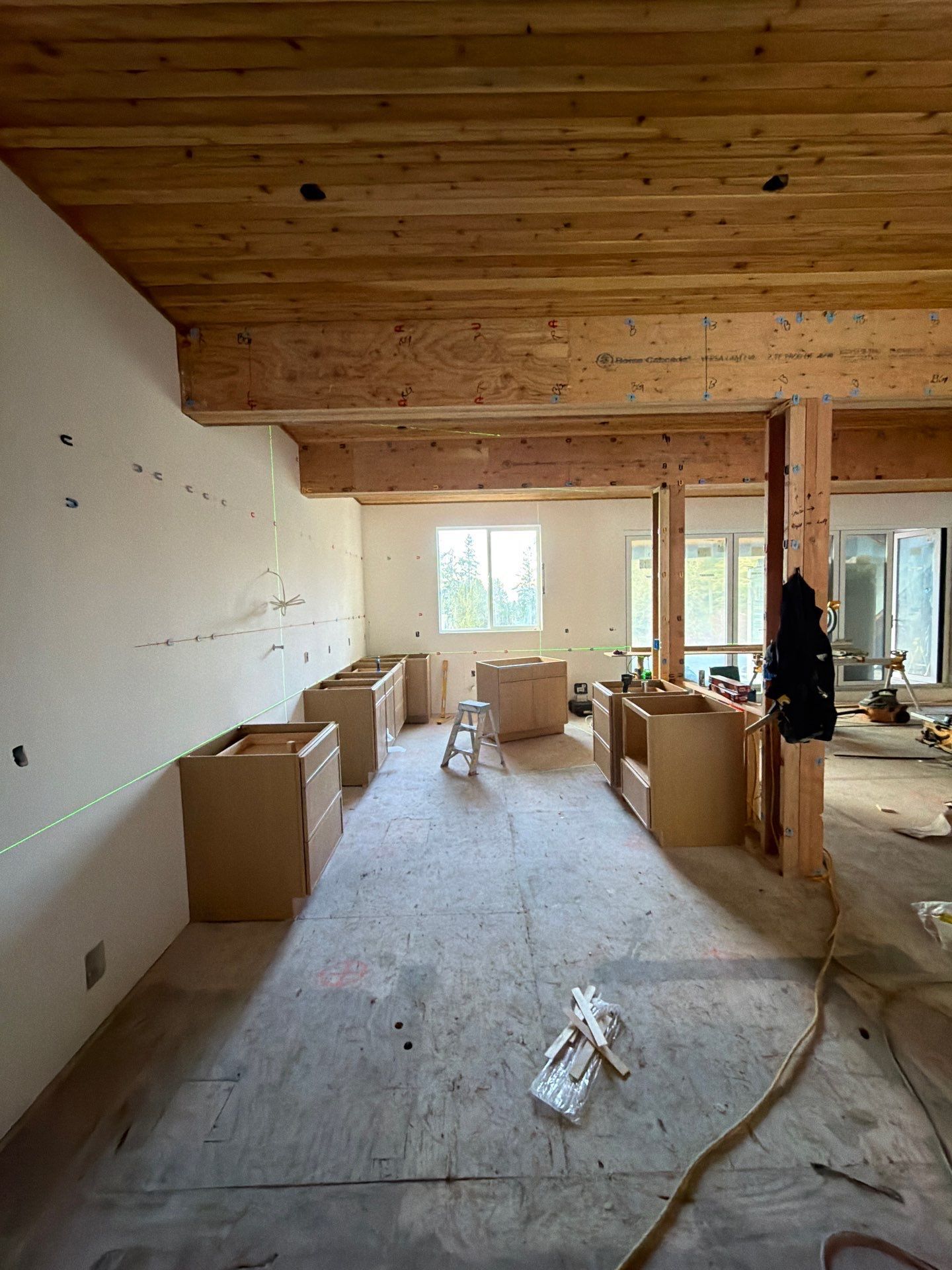
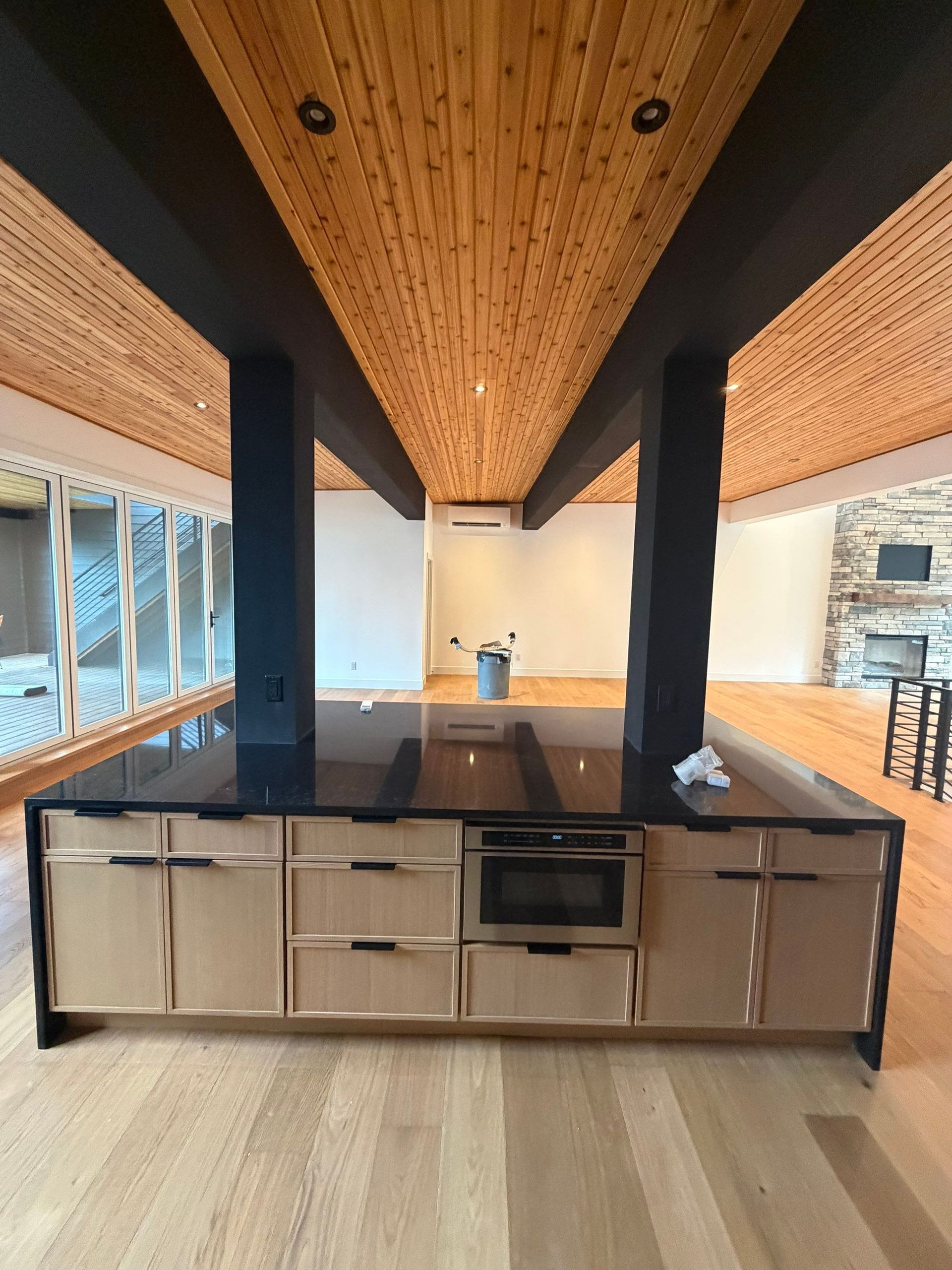
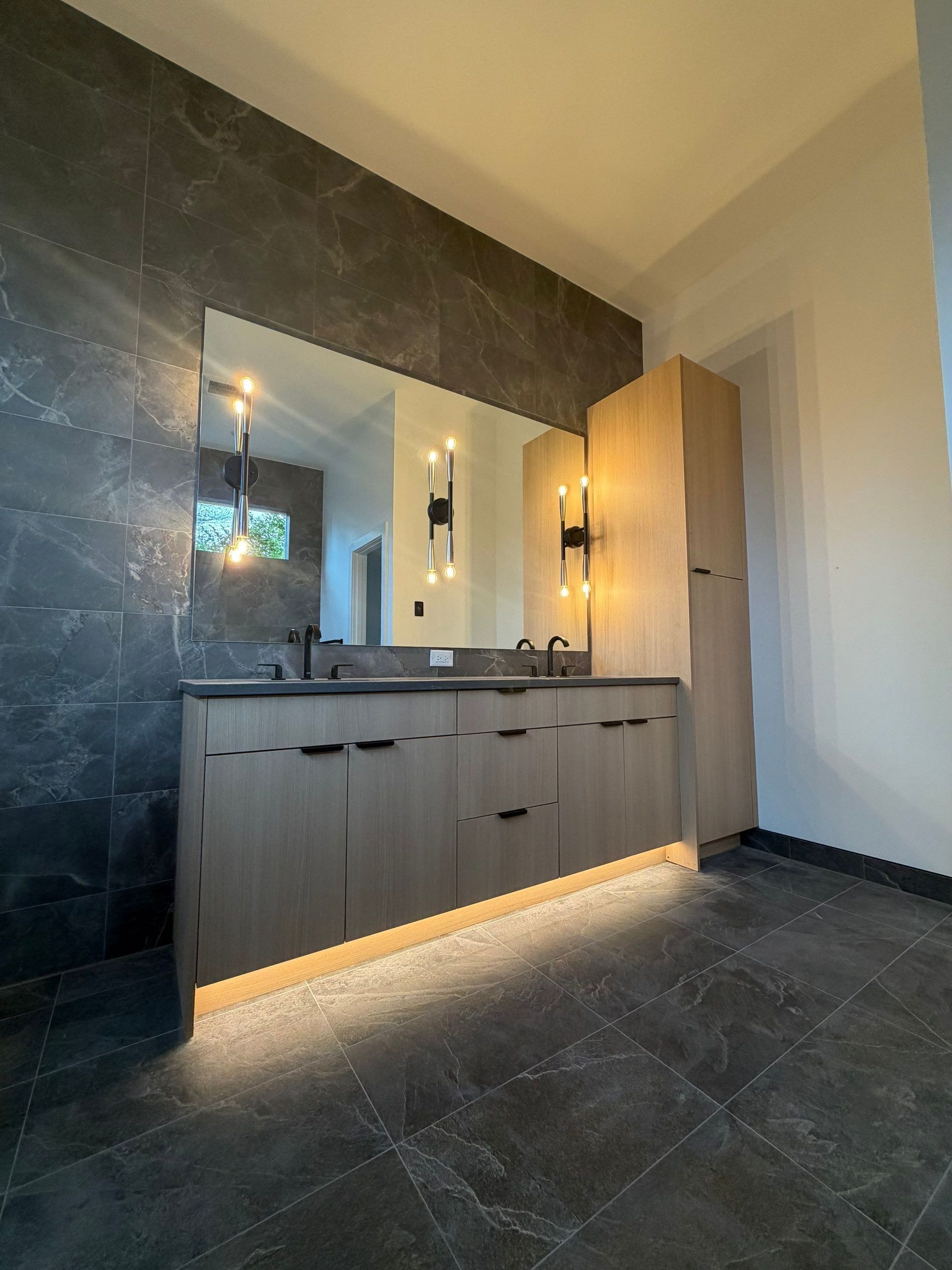
New work looks good. Two-year-old work tells you whether the caulk joints held, whether the doors still hang parallel, and whether the grout is uniform. Then sight down a twelve-foot cabinet run and see whether the line holds.
The five answers that matter most