When a gut is the right call
You're not choosing a gut for aesthetic reasons. You're choosing it because the things behind the walls have reached the end of their life at the same time. Signals:
**Active knob-and-tube wiring.** Common in pre-1950 Seattle homes. Where it's disturbed it comes out, and in a remodel of any real scope you end up disturbing most of it anyway. Some insurers won't write a policy on a house with live knob-and-tube, which forces the issue.
**Galvanized supply piping throughout.** Standard into the 1950s and by now often corroded internally. Once you're repiping the whole house you're opening most of the walls.
**No insulation anywhere.** Opening walls to insulate is the moment. If it's happening everywhere, that's a gut.
**A layout that can't be fixed selectively.** Sometimes the plan is fundamentally wrong — a warren of small rooms, a kitchen at the wrong end of the house, no path to a bathroom that doesn't cross a bedroom.
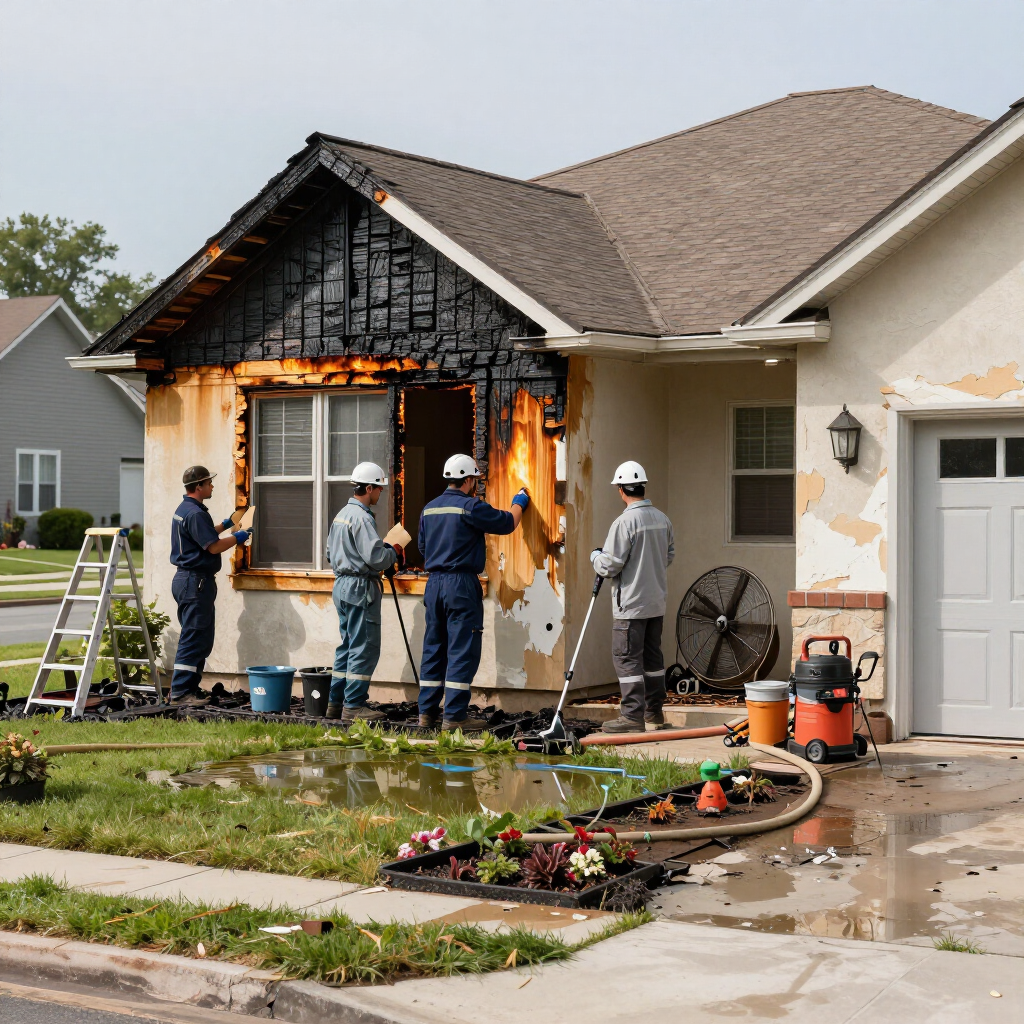
**Fire or extensive water damage.** After a significant loss, the affected structure comes out anyway. At that point, extending to a full gut is often the efficient decision — and it's the moment when insurance is already funding the demolition and rebuild of the damaged portion.
**You want a heat pump, an EV charger, induction cooking and a modern panel.** The electrical scope alone starts approaching a rewire.
When a remodel is the better decision
**The systems have life left.** A house rewired in 2005 with copper supply and decent insulation doesn't need a gut. Fixing what's wrong is cheaper and faster.
**You like most of the layout.** If the kitchen and two bathrooms are the problem, fix the kitchen and two bathrooms.
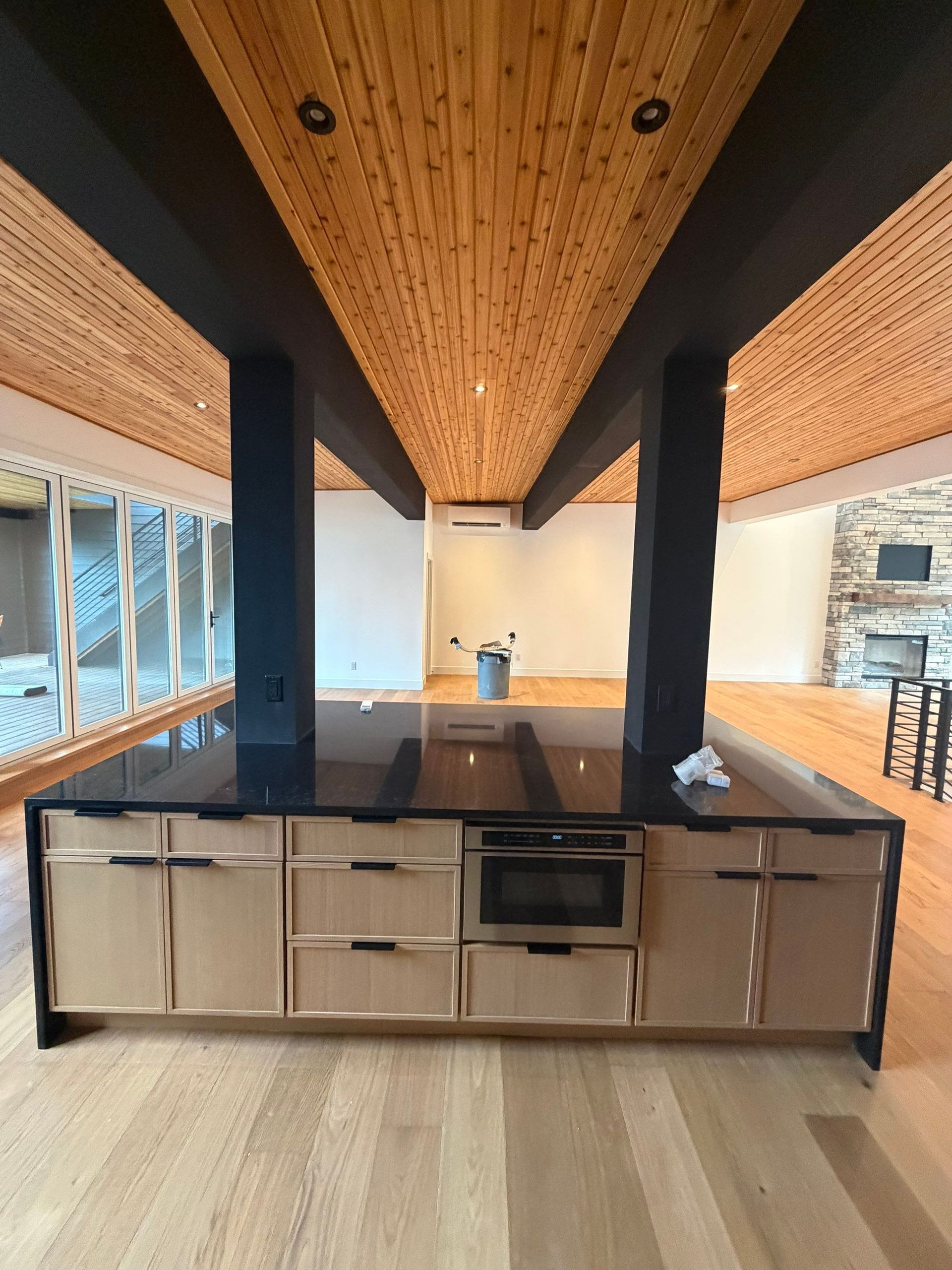
**The house has original character worth keeping.** Original fir trim, plaster with a real hard-coat surface, leaded glass, a built-in buffet — these are hard to reproduce and easy to lose in a gut. A remodel can work around them; a gut usually doesn't.
**Budget or schedule is fixed.** A remodel can be phased. A gut cannot — once the house is stripped, it has to be finished.
The hidden cost of a partial approach
Here's the trap: a remodel that keeps growing.
You open a wall for the kitchen and find knob-and-tube, so you rewire that circuit. Then the bathroom, so you rewire that too. Then it turns out the panel can't carry the new load, so you upgrade the panel. By the third room, you've spent gut-renovation money on a remodel-quality result — because each rewire was done piecemeal, through a wall opened for something else, with patch and paint each time.
If two or more of the gut signals above are present, price both approaches before committing. Sometimes the gut is cheaper than the remodel it would otherwise become.
What a gut renovation includes that a remodel doesn't
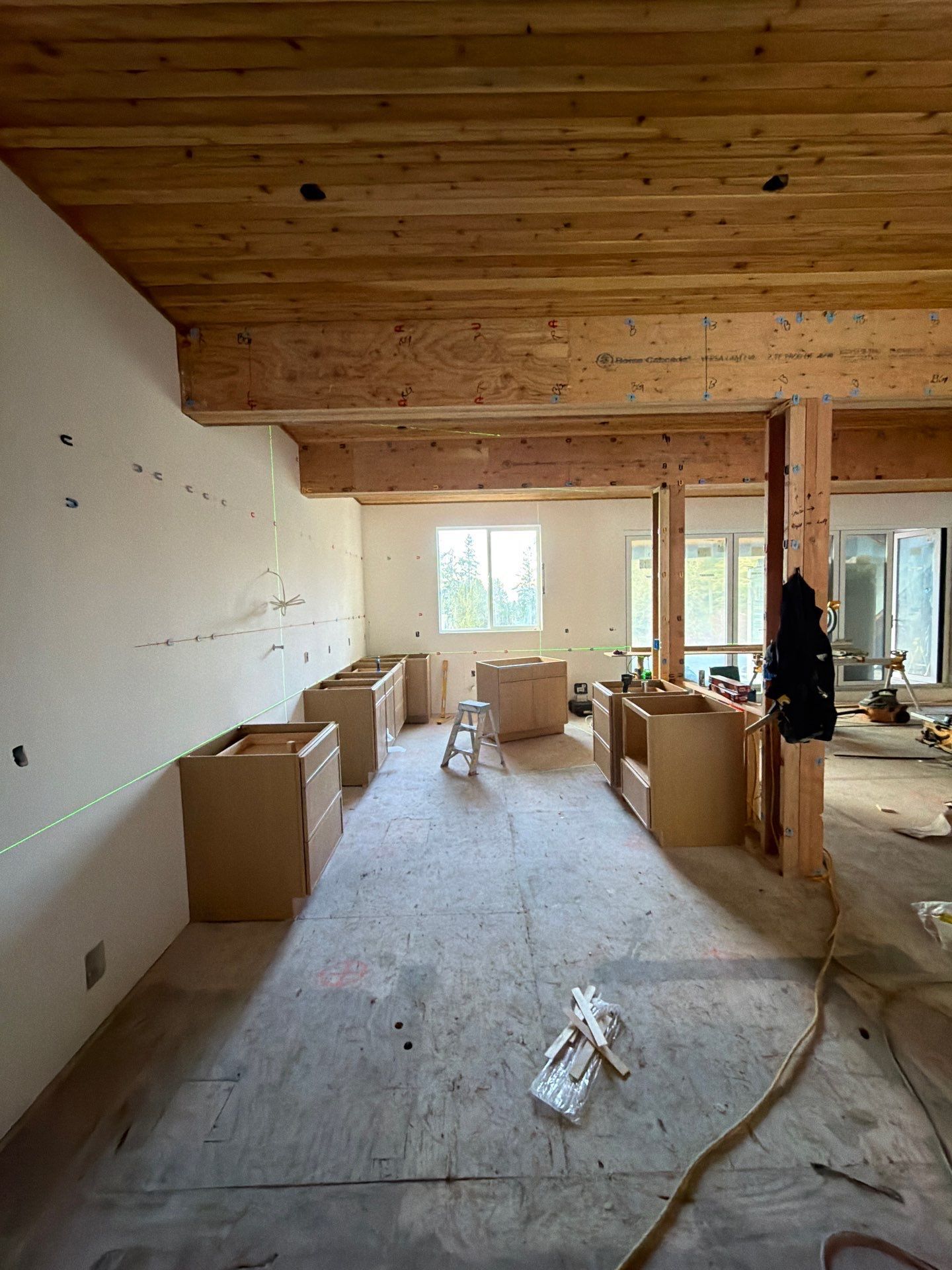
- **Whole-house rewire** with a new panel and, often, a service upgrade with Seattle City Light
- **Whole-house repipe** — supply and often drain, waste and vent
- **New HVAC** with new distribution — increasingly a heat pump in the Seattle market
- **Insulation and air sealing throughout,** which is where the comfort improvement actually comes from
- **All new windows,** since the openings are exposed anyway
- **The chance to correct structure** — sistering undersized joists, adding shear, a seismic retrofit at the foundation
- **A clean slate on layout,** unconstrained by which walls happen to be finished
The permitting difference
A remodel often qualifies for a **subject-to-field-inspection** permit through Seattle's Department of Construction and Inspections — screened in a few days, and covering interior non-structural alterations and remodeling a portion of a house.
A gut renovation with structural changes, or one that alters use or occupancy, generally requires **full plan review**, which takes considerably longer and usually involves a structural engineer's stamped drawings. Budget three to five months for design, engineering and permitting before construction starts.
How Fortress Build & Finish helps you decide
We walk the crawlspace, the attic and the panel before we price anything, and we tell you what we found. If two or more gut signals are present, we'll price it both ways so you can see the real comparison rather than guessing.
We're also candid about the original material worth saving. In a 1920s Seattle house, the fir trim and the plaster are often better than what would replace them. A gut that throws them away isn't automatically an upgrade — and where they're worth keeping, we'll say so and work around them.
Frequently asked questions
What is the difference between a remodel and a gut renovation?
A remodel keeps most walls, systems and surfaces intact and changes finishes and some layout. A gut renovation strips the house to framing and replaces everything behind the walls.
How much does a gut renovation cost in Seattle?
$350–$600 or more per square foot in 2026 — roughly $525,000 to $900,000 on a 1,500-square-foot house.
Is a gut renovation worth it?
It is when the systems are at end of life together — knob-and-tube, galvanized piping, no insulation — or when the layout can't be fixed selectively. It rarely is when the systems are sound and only the finishes are dated.
Can you live in a house during a gut renovation?
No. Electrical, plumbing and heating are all off, and the house is stripped to framing.
Does a gut renovation require a different permit?
Usually yes. Full plan review through SDCI, typically with stamped structural drawings, rather than the faster subject-to-field-inspection route most remodels use.
---
**About the author.** Ryan Watt is the marketing director at Fortress Build & Finish, a Seattle-owned finish contractor with more than 25 years in residential and commercial remodeling, custom carpentry, tile installation, and fire and water damage restoration.
*Fortress Build & Finish —
(206) 426-2067 · Licensed, bonded and insured — License No. FORTRBF756KA · Serving Seattle, Ballard, Magnolia, Queen Anne, West Seattle, Capitol Hill, Wallingford, Bellevue, Kirkland, Renton, Shoreline, Edmonds and the surrounding communities ·
fortressbuildfinish.com*