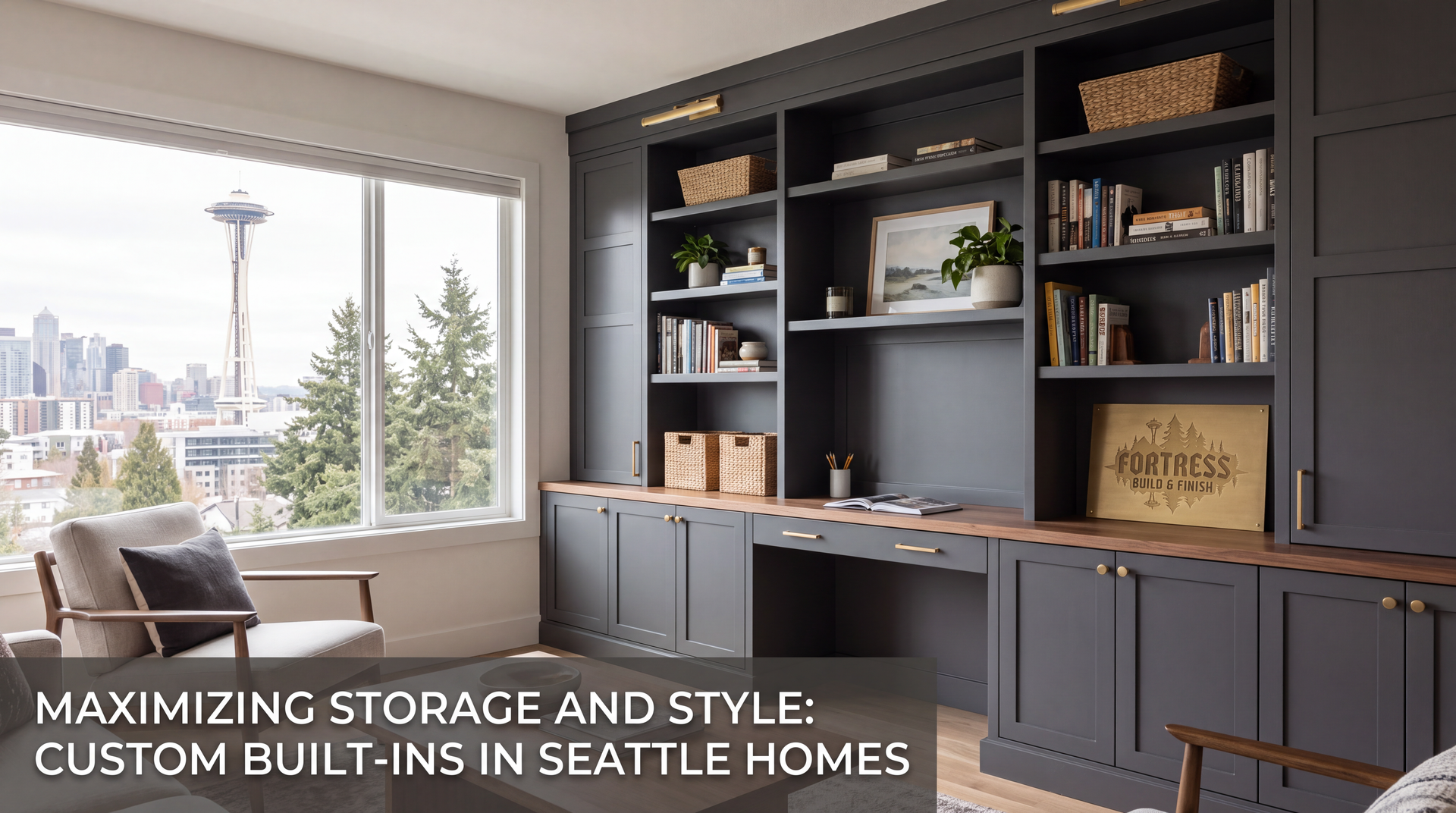
Custom built-ins make efficient use of awkward or underused spaces — alcoves, stairway walls, window nooks — while adding storage and architectural character that off-the-shelf furniture can't replicate. They're especially valuable in Seattle's older, smaller-footprint homes, where maximizing every square foot matters.
Popular Built-In Projects
Living room shelving and media centers. Custom bookshelves flanking a fireplace, or a built-in media wall sized exactly to your television and components, create a finished, intentional focal point.
Window seats. A built-in bench with storage underneath turns an underused window nook into functional seating and hidden storage — a popular addition in bay windows common throughout Seattle's older housing stock.
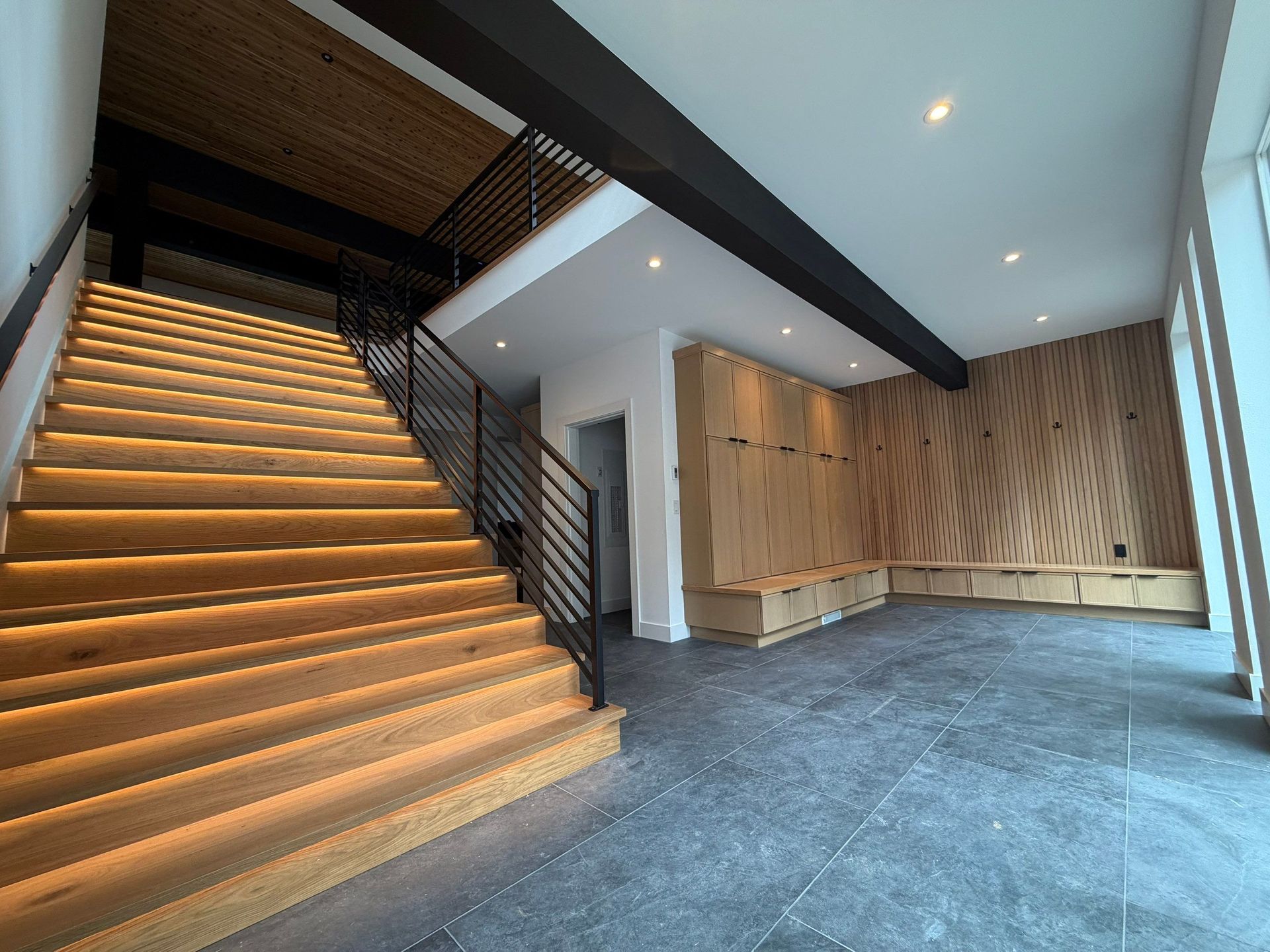
Mudroom and entryway benches. Built-in cubbies, hooks, and bench seating organize the entry chaos of shoes, bags, and jackets, particularly valuable given Seattle's rainy-season gear.
Home office built-ins. Custom desks and shelving designed around your specific equipment and storage needs, especially useful in homes where a spare bedroom or nook has been converted into a home office.
Closet systems. Custom-built closet organization maximizes storage in the small closets typical of older Seattle homes, far more effectively than generic wire shelving.
Under-stair storage. The space beneath a staircase is often wasted; custom-built drawers, shelving, or even a small nook can turn it into genuinely useful storage.
Design Considerations for Built-Ins
Matching existing trim. Built-ins should echo the molding profile, wood species, and finish of a home's existing trim so they feel original to the house rather than added on.
Proportions. A built-in that's too shallow, too tall, or oddly proportioned for its wall reads as an afterthought. Careful measuring and design against the specific room are essential.
Function first. Successful built-ins start with a clear sense of what will actually be stored or displayed — books, media equipment, off-season gear — which shapes shelf spacing, drawer sizes, and door versus open-shelf decisions.
Lighting. Integrated lighting (particularly for display shelving) elevates a built-in from purely functional to a genuine design feature.
Built-Ins as a Value-Adding Upgrade
Well-designed, high-quality built-ins are frequently highlighted in real estate listings as a distinguishing feature, since they signal a level of custom craftsmanship that's hard to replicate after the fact with furniture alone.
Working With an Existing Room's Architecture
The most successful built-ins are designed in response to a room's specific architecture, not dropped in as a generic box. This means accounting for existing baseboard height and profile, window and door casing widths, ceiling details like crown molding, and any irregularities in the wall itself — common in Seattle's older homes. A built-in that's designed around these existing details, rather than simply pushed up against them, reads as a natural extension of the room rather than an obvious addition. This is also where working with a finish carpentry team that handles both trim and built-ins pays off, since the same team responsible for matching profiles is the one designing and installing the piece.
How Fortress Build & Finish Can Help
Our finish carpentry team designs and builds custom built-ins throughout Seattle homes, matching existing trim and architectural style or creating an entirely new design direction. With more than 25 years of experience, we build each piece to fit your specific space and storage needs exactly.
Frequently Asked Questions
What's the difference between custom built-ins and furniture?
Built-ins are permanently attached to the home and built to fit a specific space exactly, while furniture is freestanding and generic in size. Built-ins typically make more efficient use of space and can be designed to match a home's existing trim and style.
Where are the most popular places for built-ins in a Seattle home?
Living rooms (flanking fireplaces), window nooks, mudrooms, and home offices are among the most common and highest-impact locations.
Do custom built-ins add value to a home?
Well-built, thoughtfully designed built-ins are frequently noted as a desirable feature in real estate listings and can meaningfully contribute to a home's overall appeal.
Can built-ins be designed to match my home's existing trim?
Yes. Matching the molding profile, wood species, and finish of existing trim is standard practice for built-ins in homes with established architectural character.
---
*Fortress Build & Finish is a locally owned, licensed and bonded construction company serving Seattle and the surrounding communities for more than 25 years. Contact us at www.fortressbuildfinish.com to discuss custom built-ins for your home.*