Bathroom Remodel in Seattle: Costs, Timelines, and What to Know
Bathroom Remodel in Seattle: Costs, Timelines, and What to Know

Seattle homeowners are no strangers to making smart investments in their properties, and few upgrades deliver as much value as a well-executed bathroom renovation. But before you start picking out tile samples and fixture finishes, there is one question that deserves a clear, honest answer: what does a bathroom remodel in Seattle actually cost, and how long will it take to complete?
The Seattle market comes with its own set of variables, from regional labor rates and permit requirements to the influence of the broader Pacific Northwest construction landscape. These factors shape both your budget and your timeline in ways that national averages simply cannot capture. Whether you are planning a straightforward cosmetic refresh or a full gut renovation, understanding the local landscape is essential before committing to a single dollar or a single contractor.
In this analysis, we break down realistic cost ranges for different project scopes, walk through typical timelines, and highlight the key decisions that will determine whether your remodel stays on track or spirals beyond your original plan.
What a Bathroom Remodel Actually Costs in Seattle
Planning a bathroom remodel in Seattle means working with a cost landscape that looks noticeably different from national figures you might encounter in a general home improvement article. According to Remodeling Magazine's 2026 Cost vs. Value report, the median cost for a mid-range bathroom remodel in the Seattle-Tacoma-Bellevue metro sits at $31,540, with full mid-range projects typically landing between $30,000 and $50,000 depending on scope, materials, and the specific conditions of the space being renovated. That benchmark is a useful starting point, but the actual range across project types spans far wider, and understanding where a given project falls requires looking at each variable individually.
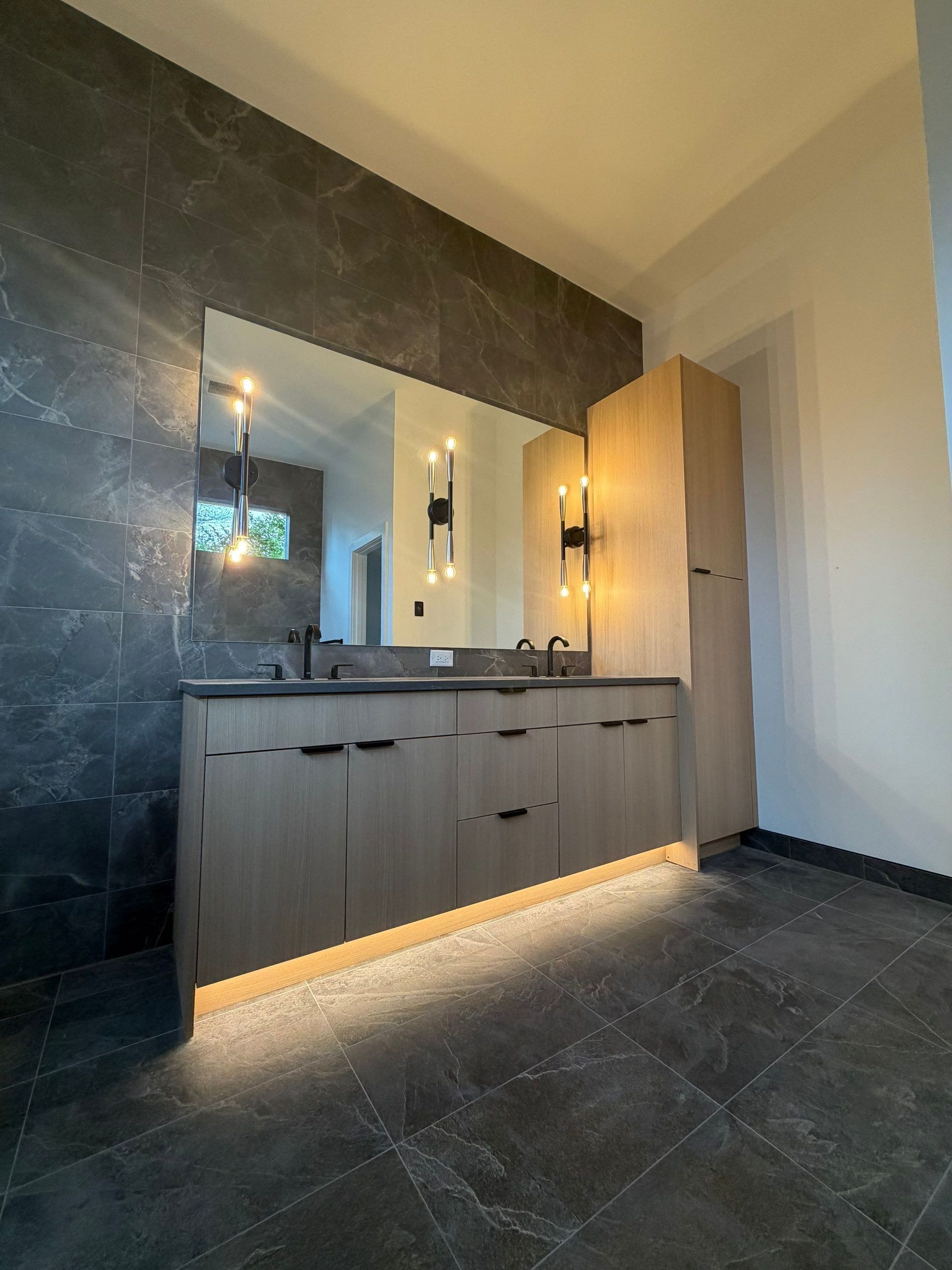
At the lower end of the spectrum, cosmetic refreshes that leave plumbing in its existing location, replacing the vanity, retiling over a sound substrate, and updating fixtures, start at roughly $18,000 to $25,000 for smaller condo and guest bathrooms. These projects avoid the cost multipliers that come with relocating drains or reconfiguring layouts, which makes them the most predictable category to budget. At the opposite end, high-end primary bathroom remodels involving custom tile work, layout reconfiguration, premium fixtures, structural modifications, and expanded square footage regularly reach $95,000 to $150,000 or more. The 2026 Seattle primary bathroom remodel pricing breakdown reflects how quickly costs escalate once a project crosses into custom territory, particularly when natural stone tile exceeding $25 per square foot or high-specification shower enclosures enter the picture.
Why Seattle Costs Run Above National Averages
Two structural factors push Seattle bathroom remodel costs consistently above what national calculators suggest. First, Seattle's Regional Price Parity index of 115.8 places the metro meaningfully above the national baseline of 100, reflecting broadly higher costs for labor, materials, and services across the board. Second, BLS data puts average trade wages in the Seattle-Tacoma-Bellevue metro at $38.20 per hour, which runs above national benchmarks and directly affects every hour of plumbing, tile, carpentry, and electrical work that goes into a bathroom project. For a complete picture of how these regional factors translate into line-item costs, the Seattle bathroom remodel cost guide from Therenology offers a detailed breakdown grounded in local data.
How Budget Splits Across a Typical Project
Understanding where the money goes is as important as knowing the total. Per NKBA data, labor accounts for 25 to 35 percent of a mid-range bathroom project budget, which means the remaining 65 to 75 percent is shaped almost entirely by material and fixture decisions. Fixtures typically represent 15 to 20 percent of total budget, cabinetry and vanity work another 15 to 20 percent, and tile and countertops 10 to 15 percent. The practical implication is clear: a homeowner choosing large-format porcelain at $10 per square foot versus basic ceramic at $2 per square foot is making a decision that moves the total project cost more than nearly any other single choice. Plumbing and electrical work, while not glamorous, also hold significant weight, particularly when aging infrastructure in older Seattle homes requires upgrading supply lines or service panels as part of the remodel scope.
The Five Factors That Drive Your Final Number
Once the scope of a bathroom remodel is on paper, five variables will determine whether your final invoice lands at $30,000 or climbs past $80,000. Understanding each one before conversations with contractors begin puts you in a fundamentally stronger position.
Drain Relocation: The Highest-Cost Decision You Might Not See Coming
Moving a toilet, shower drain, or tub is the single most consequential decision in any remodel scope. The moment a drain shifts position, the subfloor must be opened, supply and drain lines re-routed, and the framing inspected and repaired before any finish work can begin. In Seattle's significant inventory of slab-on-grade construction, including many mid-century builds across the Eastside and South Seattle, drain relocation requires cutting into concrete. That step alone adds thousands in labor and materials that no standard national estimate captures. Plumbing trade rates in the Seattle metro run $100 to $170 per hour, and the hours accumulate quickly once a slab is involved. Keeping existing plumbing in place is almost always the more financially disciplined choice; when layout goals require moving fixtures, that decision should be priced explicitly before any other budget planning happens.
Shower Configuration Controls 30 to 40 Percent of Your Total Budget
No single line item creates a wider cost range than the shower. According to data from Seattle Bathroom Remodeling LLC, shower decisions typically represent 30 to 40 percent of total project spend, which means on a $45,000 remodel, the shower configuration alone accounts for $13,500 to $18,000. A prefabricated insert sits at the low end of that range. A custom-tiled walk-in with frameless glass moves substantially higher. A full wet-room configuration, with continuous waterproofing across floor and walls and a curbless threshold, represents the highest-cost build within that category. Because Seattle's average relative humidity sits at 75 percent, waterproofing systems in any wet area are not optional upgrades; full membrane systems such as Schluter KERDI or Laticrete Hydro Ban are standard practice in this climate, and their cost should be built into the shower estimate from the start.
Material Selection Has a Compounding Effect Across Every Surface
Finish tier decisions do not affect only one line item; they multiply across every surface in the room. Large-format porcelain tile runs $5 to $15 per square foot in materials before installation labor is factored in. Natural stone regularly exceeds $25 per square foot at the same stage of pricing. A stock vanity costs $300 to $800; a custom cabinet with a quartz countertop runs $1,500 to $5,000 or more. Per NKBA data, tile and countertops represent 10 to 15 percent of a mid-range project budget, and cabinetry adds another 15 to 20 percent. The compounding effect means that moving from mid-grade to premium finishes throughout a bathroom can shift the total by $15,000 or more, even with identical plumbing and layout.
Layout Complexity Outweighs Square Footage as a Cost Driver
A 60-square-foot bathroom with relocated plumbing, a custom wet area, and out-of-square walls will cost more to remodel than an 85-square-foot bathroom with a straightforward layout refresh. As CRD Design Build notes in their 2026 cost guide, cost per square foot is not a useful planning metric for bathroom remodeling; the spread runs from $120 to $420 per square foot depending on scope, which confirms how little the number communicates on its own. Layout complexity, the number of wet areas, the degree of waterproofing required, and the condition of existing framing are the variables that actually drive the labor estimate.
Discovered Conditions During Demolition Are a Budget Variable, Not a Surprise
Roughly 30 to 40 percent of Seattle bathroom remodels uncover moisture damage, mold, subfloor rot, or outdated infrastructure once walls are opened. Seattle's older housing stock, including Craftsman-era bungalows with original galvanized supply pipes and knob-and-tube wiring, presents these conditions at higher rates than newer construction. Industry guidance consistently recommends setting aside a 10 to 15 percent contingency specifically for discovered conditions. The practical difference between a contractor with restoration experience and one without shows up precisely in this moment; a team that handles mold remediation, subfloor replacement, and infrastructure upgrades in-house can continue the project without stopping to source additional subcontractors or negotiate change orders that put the entire timeline at risk.
What Seattle's Climate Does to Your Bathroom and Your Budget
Seattle sits in Climate Zone 4 Marine, where the atmosphere carries an average relative humidity of 75 percent year-round. That sustained dampness does not behave the way seasonal humidity does in other parts of the country. It migrates through wall assemblies, settles behind tile, and loads the air inside a bathroom long after a shower ends. A waterproofing system specified for average national conditions will perform adequately in Phoenix or Denver. In Seattle, the same system faces compressive moisture pressure that those specifications were never engineered to handle, and it will eventually fail. This makes proper waterproofing the single most consequential quality decision in any Pacific Northwest bathroom renovation, not a category to economize on once bids come in.
What "Proper Waterproofing" Actually Means in This Market
Seattle's experienced remodelers have moved well past shower-floor-only waterproofing as the baseline standard. Full waterproof membrane systems, including Schluter KERDI, Laticrete Hydro Ban, and Wedi, are now the expected specification for all wet areas: shower walls, the full floor assembly, and any tile surface exposed to regular moisture contact. These systems create a continuous barrier that prevents water vapor transmission through the substrate, not just liquid water infiltration at the surface. If a contractor's bid does not identify the specific membrane product by name, that omission deserves a direct follow-up question. A quote that lists "waterproofing included" without naming the system may mean fiberglass mesh tape and thinset, which provides meaningfully less protection and does not meet the standard Seattle's climate demands. According to current 2026 pricing research for Seattle bathroom remodels, full membrane systems have become the market expectation among contractors working seriously in this region.
The Climate Premium in Your Budget
The cost consequence of Seattle's moisture environment is real and quantifiable. Advanced waterproofing systems combined with high-CFM ventilation that meets Washington State's continuous-ventilation code requirements add $2,500 to $5,000 above what homeowners in drier regions typically budget for equivalent projects. Washington's Climate Zone 4 Marine code also mandates humidistat-controlled or continuously-operating exhaust fans, not the simple switched fans that satisfy code in most other states. Proper duct routing matters as well; a fan that exhausts into an attic rather than through the roof or exterior wall creates a new moisture problem rather than solving the existing one. These line items should appear explicitly in any serious contractor's quote. If they do not, the question is not whether you are being overcharged, but whether the work will actually be done. Comprehensive Seattle bathroom cost analysis confirms that Seattle remodels run 22 to 30 percent above the national average, and the climate premium on waterproofing and ventilation is a primary driver of that gap.
Hidden Moisture: A Predictable Discovery, Not a Surprise
Roughly 30 to 40 percent of Seattle bathroom remodels uncover moisture damage or mold once walls are opened. This statistic reflects the reality of Seattle's housing stock and its decades of exposure to Pacific Northwest humidity, not negligence by prior owners or contractors. Craftsman bungalows in Ballard, Capitol Hill, and Madison Park regularly reveal compromised substrates behind tile that looks sound from the outside. When a remodel crew opens a wall and finds rot or active mold, the project's trajectory depends entirely on who is standing in that bathroom. A remodeler without remediation expertise typically does one of two things: stops work and calls a subcontractor, adding weeks and a new layer of markup to the project, or patches around the damage and continues, leaving the root condition unresolved.
This is where Fortress Build & Finish's background in fire and water damage restoration becomes directly relevant to a bathroom remodel conversation. When hidden moisture damage surfaces mid-project, the same team that designed the scope has the expertise to assess the extent accurately, perform the remediation, and continue without handing the problem to a third party. That integrated capability protects both the project schedule and the budget. There are no subcontractor coordination gaps, no inflated emergency remediation invoices, and no delay waiting for a separate crew to clear the affected area. Twenty-five years of working across Seattle's housing stock, including its water-damaged and fire-affected homes, means that discovering compromised framing or a mold colony behind a shower wall is a familiar problem with a known process, not a project-stopping crisis.
Older Seattle Homes: What to Expect When Walls Open
Most Seattle bathroom remodels in older homes deliver a predictable sequence: the demolition begins, the walls open, and what the crew finds rarely matches the original project estimate. This is not a contractor failure. It is the documented reality of remodeling a housing stock where most single-family homes were built before 1960, and where the systems inside those walls have been quietly deteriorating for decades without any visible signal from the outside.
Pre-War Bungalows: The Supply Side Problem
Craftsman bungalows concentrated in Ballard, Fremont, Queen Anne, Wallingford, and Capitol Hill were largely constructed between 1905 and 1930 with galvanized steel supply pipes that are now operating well past any reasonable service life. The failure mode is internal: galvanized steel oxidizes from the inside outward, progressively narrowing the pipe bore as corrosion builds up along the interior wall. The exterior of the pipe can look intact while the effective diameter has been reduced to a fraction of its original dimension. Homeowners in these houses often attribute the weak shower pressure to fixture problems or city supply issues, not suspecting that the pipe feeding the fixture is functionally choked. When walls open during a bathroom remodel, the condition becomes impossible to miss, and the path forward is full replacement before any new fixture is installed.
The Drain Side: What Lies Beneath the Floor
Cast-iron drain lines present a separate discovery category entirely. Cast iron is a genuinely durable material, and many pre-war Seattle homes still have functioning cast-iron drain systems. The problem is that durability is not the same as immunity. Over decades, tree roots find their way through aging joints, internal scale accumulates along pipe walls, and joint integrity fails in ways that create slow leaks inside the subfloor assembly. None of this is visible from above. The condition only surfaces when the floor opens during demolition, and the scope adjustment that follows can add meaningful cost and time to a project that was priced without accounting for drain work. Per research into Seattle's aging bungalows and what contractors find inside the walls, moisture migration through failing systems has been compounding inside these structures for years before the remodel begins.
The Electrical Cascade
Knob-and-tube wiring creates a compliance problem that extends beyond the bathroom itself. The system is ungrounded, and ungrounded circuits cannot support the GFCI-protected outlets and circuits that current National Electrical Code requires in all bathroom installations. When a remodel crew opens a wall in a pre-war Seattle home and identifies knob-and-tube wiring serving the bathroom, the project does not simply continue around it. The discovery typically triggers a broader electrical update, a separate permit through the Seattle Department of Construction and Inspections, and the associated labor and material cost. That permit runs on its own review timeline, separate from the bathroom remodel permit. Homeowners planning remodels in this era of construction should treat electrical remediation as a likely line item rather than a contingency.
Mid-Century Builds: A Different Condition Set
Seattle homes built in the 1950s and 1960s, common in Wedgwood, View Ridge, and the city's suburban edges, present a distinct pattern of hidden conditions. Early plastic supply lines used in this era are prone to brittleness and cracking, particularly at joints, after decades of thermal cycling. Subfloor assemblies in mid-century construction frequently lack the vapor management detailing that current building science requires, leaving wood components vulnerable to long-term moisture accumulation. Tile in these homes was typically installed using thick-bed mortar, a traditional sand-cement application over metal lath that was standard practice before thin-set systems became the norm. When that mud bed has absorbed moisture over decades, it can crack and void behind the tile surface, and removing it requires considerably more demolition labor than stripping a modern installation. The remodel cost implications for older Seattle homes reflect this reality: pre-1960 projects consistently run higher because the walls consistently contain more than the original budget anticipated.
What Experience Actually Buys You
The practical value of working with a crew that has spent 25 years opening walls in Seattle homes is not abstract. Fortress Build & Finish has worked across nearly every era of the city's residential housing stock, in the same neighborhoods where these conditions repeat. The assessment that happens before a project is priced is informed by pattern recognition built from hundreds of prior projects in comparable homes. A crew that has seen corroded galvanized supply lines in Ballard bungalows, failed cast-iron joints in Capitol Hill Foursquares, and brittle plastic supply connections in Wedgwood Ranch homes does not approach an estimate as though the walls might be clean. That accumulated site knowledge translates directly into more accurate scoping, more honest contingency framing, and fewer conversations mid-project about costs that "couldn't have been anticipated."
Permits, Timelines, and How the Process Actually Works
Permits are not a formality you sort out after finalizing a design. In Seattle, they are a scheduling variable that can move your project start date by weeks, and understanding the system before you engage a contractor is one of the highest-leverage things a homeowner can do.
How Permits Are Issued and Which Track Applies
All bathroom remodel permits in Seattle are issued by the Seattle Department of Construction and Inspections (SDCI) through the Seattle Services Portal. Most residential bathroom remodels fall under the Subject-to-Field-Inspection (STFI) track, which is designed for projects that do not involve complex structural changes. Under STFI, a building inspector reviews the work on-site at defined stages rather than requiring full plan review before a permit is issued. This is the practical pathway for most bath remodels in the city. Projects that relocate plumbing drains, alter structural framing, or involve significant mechanical changes follow the standard Addition or Alteration path, which requires a complete submittal package reviewed by SDCI staff before work begins.
What Requires a Permit and What Does Not
The dividing line is not always intuitive. Work that requires a permit includes relocating plumbing fixtures, adding or modifying electrical circuits, removing walls, and converting a tub to a walk-in shower when that conversion involves any plumbing rerouting. Retiling an existing shower in place, swapping a vanity, or replacing a toilet in the same location without any plumbing modifications are generally exempt from permitting requirements. One Seattle-specific complexity worth noting: electrical permits in Washington State are issued by WA Labor and Industries, not by SDCI. A bathroom remodel that touches electrical systems requires coordination across two separate permitting entities simultaneously, which is a detail that catches many homeowners off guard and adds a coordination step that an experienced local contractor manages as a matter of routine. For a thorough breakdown of what the bathroom remodel permit process in Seattle involves at each stage, the scope definition step is where most timeline problems either start or get prevented.
Timeline Realities and What Delays Them
Standard residential bathroom permits in Seattle typically receive approval in two to four weeks under the STFI track when submitted correctly. The critical qualifier is document completeness. A submittal that is missing a waterproofing detail, an accurate fixture location plan, or a plumbing diagram will be returned for correction, and each correction cycle adds time before the clock restarts. Homeowners who attempt to navigate this independently, or who hire a contractor unfamiliar with SDCI processes, routinely absorb four to eight additional weeks before a shovel touches the floor. Local knowledge of which permit track applies to a given scope, how to structure the submittal package, and what inspectors flag during rough-in and waterproofing inspections is not a minor advantage; it determines when your project actually starts. You can also use tools like the Seattle-area permit lookup to cross-reference fee estimates and permit requirements for your specific scope before conversations begin.
Contractor Credentials in This Market
Washington State contractor licensing is administered by Labor and Industries, but Seattle also requires a separate City of Seattle Contractor Registration. A properly credentialed contractor in this market holds both. Fortress Build & Finish carries active WA State license FORTRBF756KA and is bonded and insured, meaning both the state and city registration requirements are met. When evaluating any contractor for a Seattle bathroom remodel, verifying both credentials is a baseline step, not an optional check. A contractor licensed at the state level but not registered with the city is operating outside the requirements of this specific jurisdiction, which creates exposure for the homeowner on permitted work.
What a Seattle Bathroom Remodel Returns at Resale
Per Zonda's Cost vs. Value 2026 data, the Pacific region leads every other U.S. region in bathroom remodel return on investment, with a midrange project recouping approximately 80 percent of project cost at resale. That figure outpaces the national average of roughly 71 percent and reflects the sustained demand and higher baseline home values characteristic of the Seattle market. It is worth understanding, however, that the Zonda benchmark assumes a project scope of approximately $27,500, while real midrange bathroom remodels in Seattle typically run $32,000 to $58,000 all-in. The percentage may hold, but the absolute recoup dollar amount shifts with actual project cost, so buyers should run the math against their specific investment rather than treating the headline figure as a guaranteed return.
The gap between midrange and upscale ROI is equally instructive. Upscale bathroom remodels in the Pacific region recoup approximately 61 percent at resale, and local Seattle data places that figure even lower for projects involving highly customized finishes such as book-matched marble, steam showers, and custom cabinetry. The underlying dynamic is consistent: proportional returns compress as scope escalates beyond what the surrounding comparable sales can support. A well-executed midrange remodel raises a home to neighborhood standard; an upscale remodel frequently exceeds it, and appraised value does not follow proportionally.
Where the ROI Case Is Actually Strongest
The strongest return comes from remodels that address genuine functional deficiencies rather than cosmetic layering over unresolved problems. Appraisers and buyers specifically reward updated, code-current plumbing and electrical work with verifiable permit trails. Skipping permits on structural changes can cost $5,000 to $15,000 in pre-sale negotiation concessions when inspection reports surface the issue. In Seattle's older housing stock, where galvanized pipes, failing waterproofing, and subfloor rot from decades of Pacific Northwest moisture are common discoveries, a remodel that resolves those conditions produces durable value. One that installs premium tile over a compromised shower pan does not.
Execution quality is the factor that Seattle's experienced buyer pool evaluates most directly. Buyers and inspectors in this market recognize grout inconsistency, uneven tile work, and waterproofing shortcuts. These findings do not just affect aesthetics; they affect offers and negotiation outcomes in measurable ways. Fortress Build & Finish handles tile installation and finish carpentry with in-house crews rather than subcontractors, meaning the same team that assessed your project is the team performing the installation. That continuity eliminates the quality gaps that commonly appear when critical wet-area trades change hands between assessment and execution, and those gaps are precisely what informed Seattle buyers are looking for when they walk through a bathroom before making an offer.
How to Evaluate a Contractor for This Project
Selecting the right contractor for a Seattle bathroom remodel is not simply a matter of comparing bids. The complexity of this market, from aging infrastructure to mandatory dual licensing requirements, means that the wrong choice at the hiring stage will surface as budget overruns, code violations, or failing materials within a few years of project completion. There are five specific questions every homeowner should resolve before signing anything.
Verify Dual Licensing Before the First Meeting Ends
Washington State contractor licensing through L&I is the baseline, but it is not sufficient for work in Seattle. Any contractor pulling permits within city limits must also carry a current City of Seattle Contractor Registration through the SDCI. These are two separate credentials, and a contractor who holds only the state license cannot legally pull permits in Seattle. Unpermitted work does not simply create a bureaucratic inconvenience; it exposes homeowners to code violations, failed resale inspections, and potential mechanic's lien liability under Washington State law. Both credentials are independently verifiable: state license status is searchable through the WA L&I contractor lookup, and city registration can be confirmed directly through SDCI. Fortress Build & Finish holds an active Washington State contractor's license (FORTRBF756KA) and maintains the bonding and insurance that reputable Seattle work requires. Verify those details for any contractor on your list, independently, before the conversation advances.
Ask Directly About In-House Trades
The question of whether tile installation and finish carpentry are performed by in-house crews or handed off to subcontractors is one of the highest-leverage questions you can ask. In Seattle's environment, where average relative humidity sits at 75 percent year-round, tile work that has any deficiency in substrate preparation, waterproofing membrane application, or grout sealing will show consequences within a few years. When those trades are subcontracted, accountability for callbacks and warranty claims becomes fragmented across parties who may no longer have an active relationship with the general contractor. Fortress Build & Finish performs tile installation and finish carpentry with the same in-house crew that assesses each project, which means the team evaluating your scope is the same team executing it. Ask any contractor you interview to clarify this directly, and ask for examples of how warranty issues are handled if a subcontractor is involved.
Probe the Demolition Discovery Protocol
Given that 30 to 40 percent of Seattle bathroom remodels uncover moisture damage or mold once walls open, the contractor's answer to this question may affect your final cost more than any other single factor. A contractor without integrated restoration experience has two options when rot, corroded galvanized supply lines, or outdated wiring appears behind the tile: stop work while a separate remediation company is sourced, or issue a change order that substantially inflates the original estimate. Either outcome extends your timeline and budget in ways that are difficult to control after demolition has already begun. Ask candidates to describe a specific project where discovered conditions changed the scope, what the resolution process looked like, and how the final cost compared to the original estimate.
Require Evidence of Older Housing Stock Experience
Seattle's housing inventory is heavily weighted toward Craftsman-era bungalows built between 1905 and 1930 and mid-century construction that predates modern plumbing and electrical standards. Working confidently in these homes requires more than general remodeling competence; it requires pattern recognition built across many similar projects. Ask specifically how many pre-1960 homes a contractor has remodeled in Seattle, what infrastructure surprises they have encountered, and whether those situations were resolved in-scope or required separate contractors. Twenty-five years working across Seattle's housing stock, as Fortress Build & Finish has done, means those surprises are recognizable, not novel. A contractor who lacks that depth will treat older homes as an exception; a contractor with that track record will treat them as standard operating terrain.
Evaluate Communication Structure as a Contract Condition
Before signing, confirm in writing who your single point of contact is throughout the project. Understand exactly how change orders are documented, what triggers the approval process, and what happens if a permit inspection reveals conditions that were not visible during the initial assessment. Pricing transparency and realistic budget framing upfront are consistently the factors homeowners cite when a project goes well; their absence is equally consistent in accounts of projects that did not. A contractor who cannot clearly answer these structural questions before work begins will not answer them more clearly once a project is underway.
What to Expect: Timeline, Process, and Living Through It
The construction phase of a Seattle bathroom remodel runs 4 to 9 weeks from demolition to final inspection for most full gut projects, but that window reflects active work only. It does not include the planning and permitting runway that precedes it or the punch list and final inspection scheduling that follows. Seattle inspectors typically book 1 to 2 weeks out for final inspection slots, which means the calendar experience stretches meaningfully longer than the construction timeline alone suggests. When evaluating a contractor's schedule commitment, ask specifically whether their quoted timeline covers construction only or the full elapsed period from permit issuance through certificate of occupancy.
The construction sequence itself follows a fixed order that Seattle's inspection system enforces. Demolition clears the space and exposes existing conditions. Rough framing and any structural modifications come next, followed by plumbing and electrical rough-in, each of which requires an inspection clearance before the project advances. Waterproofing and substrate preparation follow, with a dedicated shower pan and waterproofing inspection that must pass before tile work begins. Tile installation, fixture setting, and finish carpentry close out the construction phase in sequence. There is no skipping ahead. Each inspection gate is a hard stop, and a contractor who treats those gates as administrative formalities rather than schedule dependencies will consistently miss their own projections.
The two most common causes of timeline extension are permit revision cycles and discovered conditions after demolition. Approximately 95 percent of permit delays at SDCI trace back to incomplete initial submissions, meaning contractor experience with Seattle's permitting system has a direct effect on your schedule. A single revision cycle adds 1 to 4 weeks. On the discovered conditions side, roughly 30 to 40 percent of Seattle bathroom remodels uncover moisture damage, mold, or substandard prior work once walls open, particularly in homes built before 1970. The meaningful variable is not whether these conditions occur; it is whether your contractor has built schedule contingency into the timeline and communicates in writing with a clear scope change process when they do. A proactive weekly update, photo documentation of what was found, and a written change order before additional work proceeds are the practical markers of a contractor who handles this well.
Timing your project is a lever worth using. Spring and summer represent peak demand in Seattle's remodeling market, and contractors booking June or July starts are often fielding calls from March onward. Fall and winter bookings carry a real practical advantage: better contractor availability, tighter scheduling windows with fewer competing projects pulling crew attention, and in some cases improved pricing on labor. If your project scope is set and you have flexibility on timing, a November or February start date is worth considering seriously.
For primary bathrooms going out of service during the project, this conversation needs to happen before work begins, not during demolition week. In multi-bathroom homes the disruption is manageable with coordination. In single-bathroom homes it requires an explicit plan: a gym membership, a neighbor arrangement, or a temporary portable facility for the construction crew. Do not assume the contractor has accounted for this. Ask directly, confirm the plan in writing, and factor the bathroom-out-of-service window into your own scheduling decisions before the project starts.
Ready to Plan Your Seattle Bathroom Remodel?
Before requesting a single quote, confirm which cost tier your project actually occupies. A cosmetic refresh runs $18,000 to $25,000, a mid-range full remodel falls between $30,000 and $50,000, and a high-end primary bathroom starts at $95,000 and above. Presenting contractors with a clearly defined scope prevents bid comparisons that mix fundamentally different project types.
When evaluating contractors, two licensing requirements apply simultaneously in this market: an active Washington State L&I registration and a City of Seattle Contractor Registration. Beyond credentials, prioritize teams that perform tile and finish carpentry in-house rather than subcontracting those trades, and look specifically for documented experience with Seattle's older housing stock, where conditions behind the walls routinely change a project's trajectory.
Fortress Build & Finish brings more than 25 years of Seattle-area experience, with in-house tile and finish carpentry crews and a restoration background that directly prepares the team for the hidden conditions this city's homes present. That restoration experience matters practically: it means the team already understands substrate failures, moisture-compromised framing, and the remediation steps older homes frequently require before any finish work begins. Active WA license FORTRBF756KA; bonded and insured.
Request a consultation before committing to a budget or signing with any contractor. Walking through your specific scope, realistic timeline, and any known conditions in your home first positions you to evaluate bids accurately and move forward with confidence.
Conclusion
A bathroom remodel in Seattle is one of the most rewarding investments you can make in your home, but success starts with realistic expectations. Keep these key takeaways in mind as you move forward: Seattle labor and permit costs run higher than national averages, project timelines vary significantly based on scope and contractor availability, and cutting corners on planning almost always leads to budget overruns.
The difference between a stressful renovation and a seamless one often comes down to preparation. Know your numbers, vet your contractors carefully, and build flexibility into both your budget and your schedule.
Ready to take the next step? Connect with a licensed Seattle remodeling contractor for a detailed estimate tailored to your specific project. Your dream bathroom is within reach; it just takes the right plan to get there.
Recent Posts