What to Know Before Hiring a Finish Carpentry Contractor in Seattle
What to Know Before Hiring a Finish Carpentry Contractor in Seattle
The details that make a home feel truly finished often come down to the work you can barely see but always notice. Crisp crown molding, perfectly fitted baseboards, custom built-ins that look like they belong, these are the touches that separate a house from a home. And behind every one of those details is a skilled finish carpenter.
If you are searching for finish carpentry Seattle professionals, you already know that Seattle's competitive housing market makes quality craftsmanship more valuable than ever. But hiring the right contractor is not as simple as picking the first name that appears in a search result. Without knowing what to look for, you risk wasted money, project delays, and subpar results that stand out for all the wrong reasons.
This guide is designed specifically for homeowners who are new to the hiring process. We have put together a practical list of everything you need to know before signing a contract with a finish carpentry contractor in Seattle. From licensing requirements to red flags to watch for, you will walk away feeling confident and prepared to make the right choice.
What Finish Carpentry Actually Covers
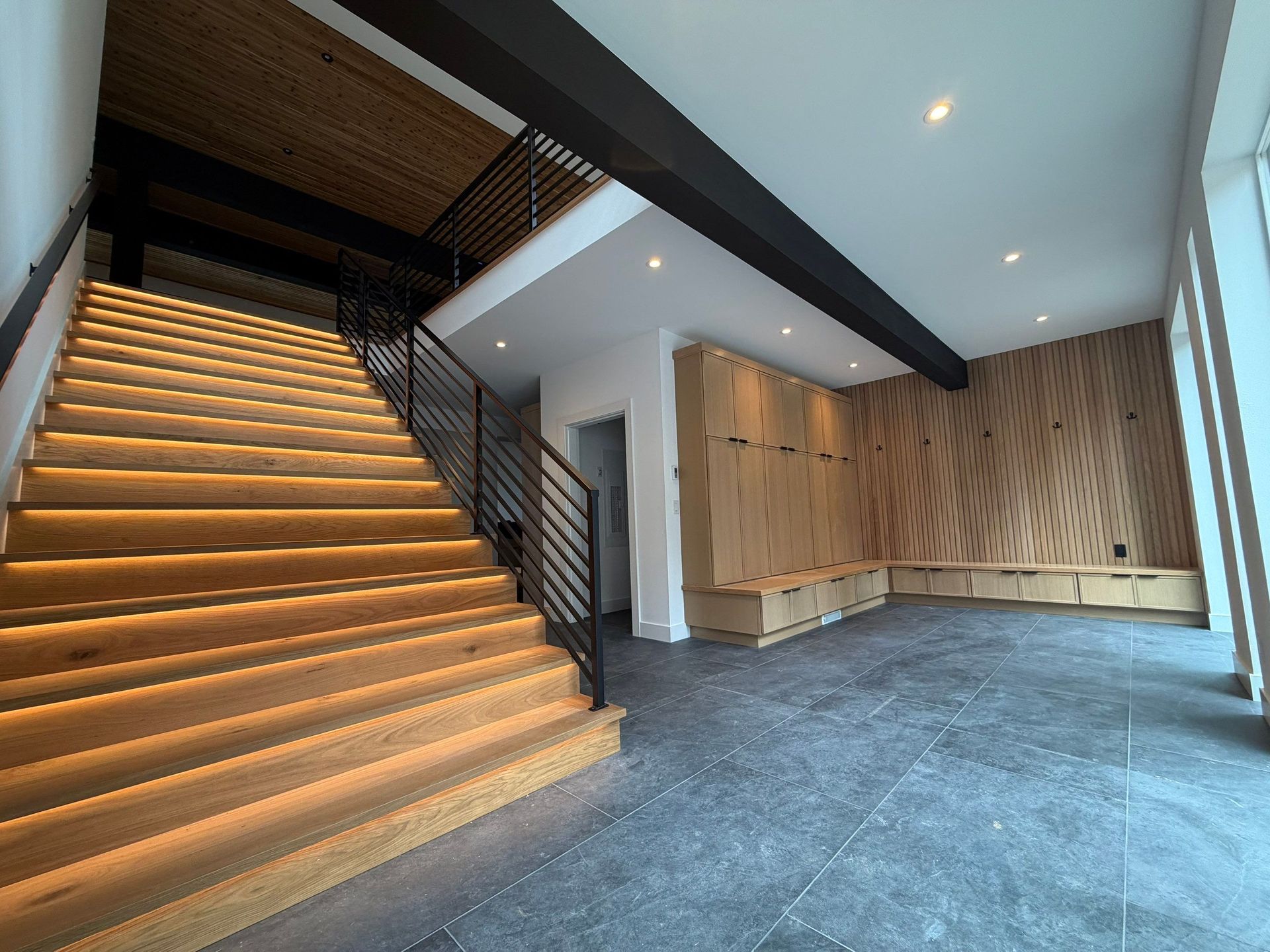
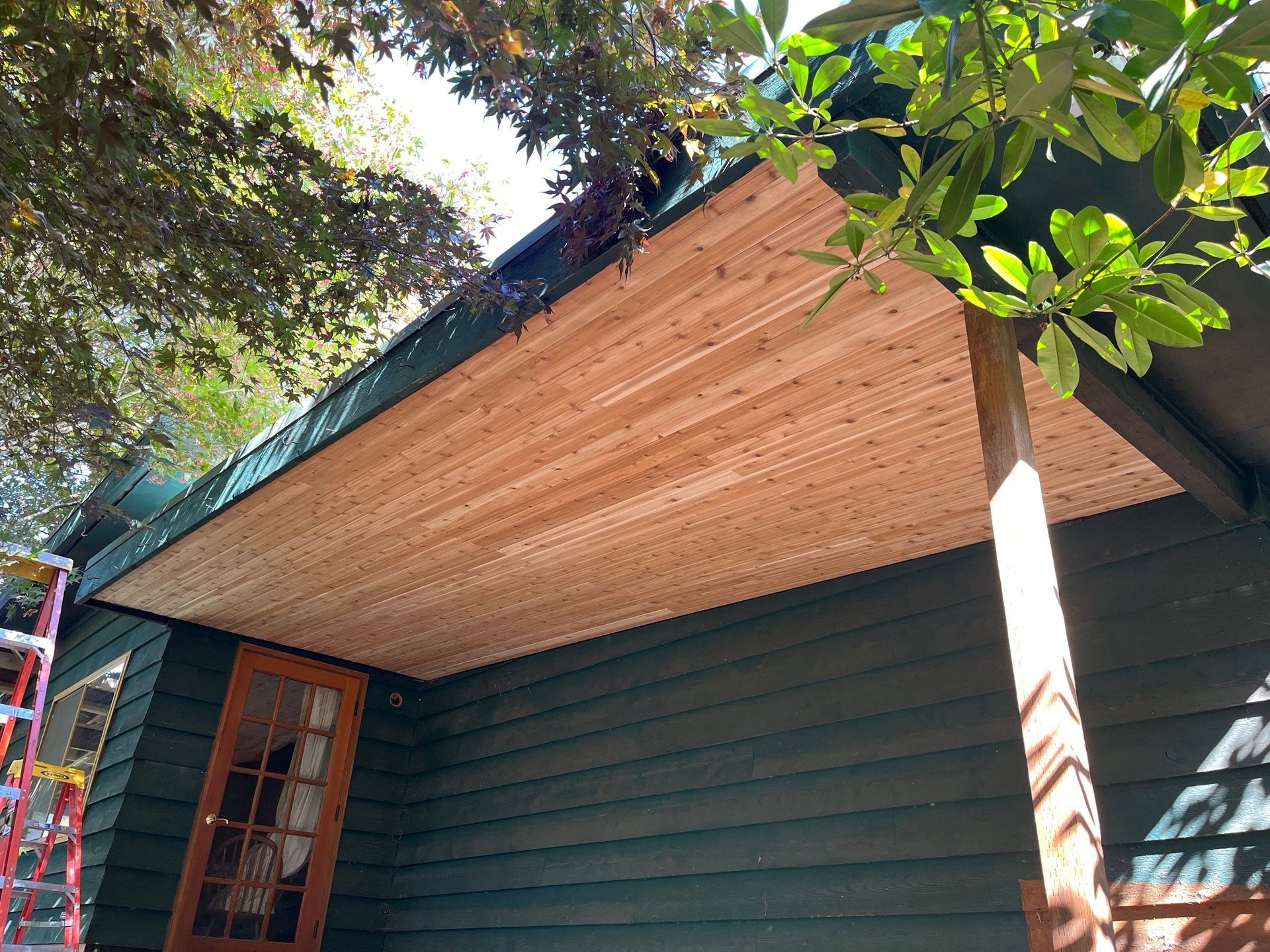
Finish carpentry refers to the final layer of interior woodwork installed after structural construction is complete. Once the walls are painted and the floors are down, everything visible made of wood falls under this trade: baseboards, crown molding, window and door casings, wainscoting, chair rails, paneling, built-in shelving, cabinetry fitting, stair treads, risers, balusters, and decorative architectural woodwork. If you can see it and it is wood trim, it almost certainly qualifies.
This is an important distinction for homeowners to understand. Rough carpentry covers the structural bones of a building, including wall framing, floor joists, sheathing, and blocking. Finish carpentry takes over where that structural work ends. The two trades rarely overlap, and confusing them when describing a project to a contractor can lead to miscommunication before work even begins.
Many homeowners are genuinely uncertain whether their specific project falls under finish carpentry. Common examples that do qualify include adding crown molding to a living room, fitting a built-in bookcase into an alcove, replacing stair railings, or installing custom window trim in a Seattle Craftsman bungalow. You can review the full scope of finish carpentry services at Fortress Build & Finish's custom carpentry page to see how broadly this trade applies to real residential projects.
The scale of the industry reflects how central this work is to construction broadly. The global finish carpentry contractors market was estimated at USD 297.43 billion in 2025 and is projected to reach USD 419.50 billion by 2032, growing at a CAGR of 5.03%. That figure represents consistent homeowner and commercial demand for precise, skilled interior woodwork across every type of building.
Knowing the scope of finish carpentry pays a practical dividend when you go to request an estimate. Homeowners who can clearly name the elements they want, such as specifying crown molding in the living room, door casings throughout the main floor, and a built-in bookcase flanking the fireplace, give contractors the information needed to provide accurate bids. Vague project descriptions are one of the most common sources of surprise change orders. A clear scope protects both the homeowner and the contractor from misaligned expectations before a single measurement is taken.
Why Seattle's Housing Stock Requires Specific Expertise
Seattle's residential inventory spans more than a century of construction history, and that layered timeline is not just an architectural curiosity. King County assessment records confirm subdivisions dating back to 1909, meaning a single Seattle neighborhood can contain early Craftsman bungalows, postwar colonials, 1980s production builds, and modern infill units within the same few blocks. Each era represents a completely different set of finish carpentry conditions.
Each Era Has Its Own Rules
Early 20th-century Craftsman and Queen Anne homes were built with old-growth Douglas fir and western red cedar, species that are dense, tight-grained, and no longer standard in modern supply chains. Their trim profiles tend to be thick, flat, and geometric, with wide casing and bold base molding that reflects the Arts and Crafts design philosophy. Matching that millwork on a remodel requires sourcing comparable material and reproducing profiles by hand or custom milling, not simply pulling stock trim from a lumber yard. By contrast, 1990s production builds typically used finger-jointed pine with simpler colonial or ranch profiles, and modern infill construction on tight urban lots often incorporates engineered lumber substrates and non-standard geometries that require a different installation approach entirely.
Climate Is a Constant Factor
Seattle's persistent moisture, significant annual rainfall, and year-round temperature cycling affect how interior finish materials perform over time. Wood expands and contracts with humidity changes, and in a maritime climate, acclimation requirements before installation are not optional. Choosing the wrong species or skipping proper acclimation can lead to joint separation, panel warping, and paint failure within a single season. A contractor with more than 25 years working across Seattle's neighborhoods understands these variables from direct field experience, not from general carpentry training alone.
Verify Licensing, Bonding, and Insurance Before Committing
Before signing any contract with a finish carpenter in Seattle, verifying credentials is a step that should never be skipped. Washington State requires all construction contractors to hold an active license issued by the Department of Labor and Industries (L&I). This applies to any professional performing finish carpentry work, including trim installation, crown molding, built-ins, and door hanging. The good news for homeowners is that verification costs nothing and takes only a few minutes using the L&I online contractor lookup tool, where you can search by business name or license number and confirm current status in real time.
A valid Washington State contractor license is more than a business formality. It confirms the contractor has met the state's bundled requirements for registration, bonding, and insurance. For example, Fortress Build & Finish holds active license FORTRBF756KA, which any homeowner can independently verify through L&I before committing to a project. Reputable contractors will provide their license number without hesitation; if a contractor deflects or avoids the question, treat that as a significant warning sign.
Understanding what bonding and insurance actually protect is equally important. Bonding provides a financial remedy if a contractor fails to complete agreed work or causes property damage during the job. Insurance, specifically general liability and workers' compensation coverage, protects you if a worker is injured on your property during the project. Without it, you could face personal liability for medical costs or legal claims.
Unlicensed contractors often advertise lower bids precisely because they are not carrying these overhead costs. However, working with one carries serious consequences. It can void your homeowner's insurance coverage if a claim arises from work performed by an unlicensed party, and it leaves you with no legal recourse if the work is defective or left incomplete. You can also verify licensed finish carpenters operating in Washington through community and trade resources, but always cross-reference directly with L&I's official database as the authoritative source.
The Assessment-Execution Gap and Why It Matters
One of the most persistent structural problems in the contracting industry is the gap between the person who scopes a project and the crew that ultimately performs the work. When an estimator assesses your space, builds a materials list, and hands that information to a separate installation team, something almost always gets lost in the transfer. Tolerances get interpreted differently. Material substitutions happen without client notification. The installation sequence shifts to match crew availability rather than project logic. Accountability becomes diffuse because no single person owns the full arc of the project, from the first walkthrough to the final inspection.
This problem is particularly damaging in finish carpentry, where precision is not optional. Crown molding profiles, door casing reveals, and built-in sequencing relative to paint and flooring schedules all require the installer to have internalized the original scope conversation. According to industry analysis, poor scope interpretation is among the most destructive recurring failures in construction estimating, precisely because nuance and site-specific judgment rarely survive a handoff intact. The broader industry puts the annual cost of rework, coordination failures, and documentation breakdowns at $273 billion as of 2026, a figure driven largely by decisions made before crews ever arrive on site.
An in-house model directly solves this. When the same team that walks your space and builds the scope is also the team doing the installation, there is no handoff to misfire. Questions answered during assessment stay answered through execution.
Fortress Build & Finish operates exactly this way. The crew that assesses your project is the crew that performs the finish carpentry, with no work handed off to a subcontracted team. For homeowners, that means fewer surprises mid-project, cleaner communication throughout, and a single point of contact when questions come up. It also means that the person who made a commitment during your initial walkthrough is accountable for honoring it on installation day.
What to Expect Around Pricing and Project Timelines
Finish carpentry pricing in Seattle does not follow a simple formula, and any website or app promising instant accurate quotes should be treated with skepticism. Project costs shift significantly based on scope, material selection, site conditions, and the complexity of the labor involved. A straightforward trim installation in a newer home with square walls and standard ceiling heights carries very different labor demands than fitting custom millwork in a 1920s craftsman with settled framing and irregular angles. The only reliable source for a number you can actually budget against is a contractor who has reviewed the actual scope in person.
Current market conditions make this even more important to understand. Seattle-area consumer prices rose 4.9% year-over-year through April 2026, with energy costs up 23.7% over the same period. Material and overhead costs for contractors have increased across the board, and estimates not grounded in 2026 pricing carry real risk of being understated by the time work begins. Seattle labor rates already run approximately 32% above the national average, and material costs sit roughly 18% above national benchmarks. An estimate built from outdated figures or national averages is not a reliable planning tool for a Seattle project.
Crew structure also affects your budget protection in ways that are easy to overlook. Contractors working with stable, in-house teams have better control over labor costs and scheduling than those assembling subcontract crews whose availability and rates shift with market demand. Washington State's construction sector has been among the hardest-hit industries in recent job losses across the Puget Sound region, which adds further pressure on subcontract labor availability.
When vetting any contractor, ask directly how they handle scope changes, what triggers a change order, and how material costs are documented throughout the project. These questions reveal whether a contractor has a disciplined process or a loose one. You can use a 2026 home remodeling cost calculator built from Puget Sound bid history as a rough orientation tool, but treat it as a starting point rather than a final figure.
Finally, push for itemized estimates that separate labor costs from material costs. Bundled lump-sum figures make it nearly impossible to compare bids accurately or identify where cost exposure actually sits. Transparent line-item breakdowns give you a clearer basis for comparison and reduce the likelihood of unexpected charges appearing at the invoice stage.
When DIY Finish Carpentry Makes Sense (And When It Does Not)
Online tutorials and prefabricated trim kits have genuinely lowered the barrier to entry for certain finish carpentry tasks. Replacing a single baseboard run, touching up painted trim, or swapping out a door casing on a standard rectangular doorframe are projects a capable, patient homeowner can complete with a miter saw, a nail gun, and a weekend. The tool investment for basic baseboard work starts around $200 to $300, and the margin for error on a straight, single-surface installation is forgiving enough to allow for learning on the job.
The situation changes considerably once a project crosses into precision territory. Fitting crown molding against irregular ceilings requires compensating for wall and ceiling angles that almost never form a true 90 degrees; every corner that looks square is slightly off, and gaps appear immediately if the installer cannot read and correct for those variations. Building site-specific built-ins, matching historic trim profiles found in Seattle's older Craftsman bungalows and Tudor revivals, and installing stair components like newel posts and balusters all require measurement accuracy that leaves virtually no room for error. One documented example involved an experienced general contractor with a professional crew and a new 12-inch dual-bevel miter saw producing a growing pile of incorrectly cut crown molding because the technique required was genuinely trade-specific.
The visibility factor is the strongest practical argument for hiring a professional when the complexity is there. Rough framing errors disappear behind drywall; finish carpentry is the first thing anyone sees when they step into a room, and mistakes are permanent until corrected at additional cost.
A simple rule of thumb holds up well in practice: if the project requires matching an existing profile, involves more than one intersecting surface, or will serve as a focal point in the room, professional execution is almost always worth the investment.
Material and Design Trends Shaping Seattle Finish Carpentry
Seattle's finish carpentry market is being shaped by several converging forces that homeowners should understand before starting any interior project.
Customization has replaced commodity as the default expectation. Built-ins, statement paneling, and architectural millwork are now requested across remodels of every scale, not just high-end custom builds. A 2026 millwork trends report notes a 40% increase in requests for fluted and ribbed millwork details compared to just two years ago, reflecting a broader shift toward interiors with genuine character. Seattle homeowners are increasingly asking for pieces designed specifically for their space rather than assembled from catalog components.
Eco-friendly and low-emission materials have moved from preference to expectation. Clients are requesting FSC-certified lumber, low-VOC adhesives, and water-based finishes, driven partly by consumer awareness and partly by regulatory pressure on indoor air quality. When vetting contractors, ask specifically about the emission classifications of the wood products and adhesives they plan to use. Not all contractors track this information; those who do are usually operating at a higher standard overall.
Smart home integration is changing how finish carpentry gets designed. Per current millwork drafting trends, technology accommodations are increasingly built into casework and paneling from the start, including concealed wiring channels, ventilation cutouts, and built-in charging access. Retrofitting these details after installation is far more disruptive and costly.
The Building Finishing Contractors market is projected to grow at a CAGR of 6% through 2033, and Seattle's 2026 interior design landscape reflects that momentum directly. Biophilic materials, warm wood tones, and textured surfaces suited to the Pacific Northwest climate are dominating local remodels. A contractor with deep regional experience will know which wood species perform reliably in Seattle's humidity, which suppliers can meet current lead times, and which finishes hold up over the long term in this specific climate.
Questions to Ask Any Finish Carpentry Contractor Before You Hire
Hiring the right finish carpenter starts with asking the right questions. These five questions give you a reliable framework for evaluating any contractor before you commit.
1. How long have you been doing finish carpentry specifically in Seattle, and can you provide references from comparable projects in similar home styles?
General construction experience and Seattle-specific finish carpentry experience are not the same thing. Seattle's housing stock includes Craftsman bungalows, Tudor Revivals, and mid-century ranches, each with distinct trim profiles and proportions. Ask for references from projects in homes of a similar era and style to yours, and follow up with those references directly.
2. Is your crew in-house or do you subcontract the finish carpentry work, and who will be the primary contact throughout the project?
Subcontracting is common in construction, but precision finish carpentry depends on consistent craftsmanship from start to finish. Knowing whether the same crew that starts your project completes it matters significantly for quality control and accountability.
3. Can you provide your Washington State contractor's license number and confirm your current bonding and insurance status?
Washington State requires active contractor registration through the Department of Labor and Industries, plus a surety bond and general liability insurance. Request the license number and verify it independently. Fortress Build and Finish holds active license FORTRBF756KA.
4. How do you handle scope changes, and is there a written change order process?
Undocumented scope changes are among the most common sources of contractor disputes. Any reputable contractor should require a written, signed change order before proceeding with additions or modifications, including material cost increases.
5. What is your process for matching existing trim profiles in an older home?
Original millwork profiles in pre-1940 Seattle homes are often non-standard and out of production. Ask whether the contractor has custom fabrication capability or an established relationship with a local millwork shop, and request documented examples of historical profile matching work.
Choosing the Right Finish Carpentry Contractor in Seattle
Selecting a finish carpentry contractor in Seattle comes down to a handful of non-negotiable checkpoints. Work through each one before signing anything.
1. Verify license, bonding, and insurance first. Washington State requires an active contractor's license for all construction work, and this credential is verifiable through the Department of Labor and Industries online lookup tool. Bonding protects you if a contractor abandons a project or causes damage; general liability and workers' compensation insurance protect you from financial exposure if something goes wrong on your property. These are baseline requirements, not differentiators.
2. Confirm Seattle housing stock experience. If your home was built before 1980 or has original millwork worth preserving, ask for documented examples of comparable work. Period trim profiles require matching skill and material knowledge that generalist contractors often lack.
3. Ask about team structure. In-house execution with a consistent crew produces measurably better outcomes than a model where assessment and installation are handled by different parties.
4. Get everything in writing. An itemized estimate broken down by scope, materials, and labor, paired with a clear change order process, protects both sides from costly disputes.
Fortress Build & Finish has served Seattle homeowners for more than 25 years, holding an active Washington State contractor's license (FORTRBF756KA), with a fully in-house team and finish carpentry expertise spanning every era of Seattle's residential housing stock. Contact us to discuss your project.
Conclusion
Hiring the right finish carpentry contractor in Seattle does not have to feel overwhelming. By focusing on proper licensing and insurance, reviewing past work carefully, asking the right questions upfront, and getting everything in writing, you protect your investment and set your project up for success.
The details matter. A skilled finish carpenter transforms a house into something that feels intentional, polished, and uniquely yours. That kind of craftsmanship holds its value in Seattle's competitive market for years to come.
Now that you know what to look for, take the next step with confidence. Start gathering referrals, schedule consultations with at least three contractors, and use the criteria in this guide to compare your options. The right professional is out there. Your finished home is worth finding them.
Recent Posts