Tile Installation in Seattle: What to Know Before You Hire
Tile Installation in Seattle: What to Know Before You Hire

Seattle's wet climate, older housing stock, and booming renovation culture make tile one of the most popular choices for kitchens, bathrooms, and entryways across the city. But not every tile installation seattle homeowners pay for ends up being worth the investment. Subpar workmanship, wrong material choices, and misaligned expectations can turn what should be a straightforward upgrade into a costly headache.
Whether you're renovating a Capitol Hill craftsman or updating a new build in Ballard, the quality of your tile installation comes down to one critical decision: who you hire and how prepared you are before they show up. The good news is that a little knowledge goes a long way.
In this guide, you'll find a practical breakdown of what separates a skilled tile installer from an average one, what questions to ask before signing a contract, and which common mistakes Seattle homeowners make when hiring for this type of work. If you want results that hold up against Seattle's humidity and stand the test of time, this list is your starting point.
Why Seattle Tile Work Is Its Own Category
Tile installation in Seattle operates under a set of conditions that make generic how-to guides and out-of-market contractor experience genuinely inadequate. The region's wet climate, aging housing stock, and seismic exposure combine into a set of compounding challenges that require local knowledge to navigate correctly, not just technical skill in isolation.
Moisture is the dominant variable. The Pacific Northwest keeps homes damp for roughly eight months of the year, and that persistent humidity does not stay in bathrooms. It migrates into wall cavities, floor assemblies, and substrate layers throughout the house. According to Seattle-specific bathroom tile guidance, poorly waterproofed shower installations typically show mold and grout failure within three to five years under these conditions. That makes substrate preparation and full waterproofing membranes foundational requirements for any lasting tile installation here, not optional upgrades.
Seismic activity adds a structural layer to every project. Seattle's earthquake risk is significant enough that the City of Seattle issues dedicated Earthquake Home Retrofit Permits/earthquake-home-retrofit-permit) for residential structures. That same ground movement places ongoing stress on tile and grout joints over time. Proper substrate deflection limits and the use of flexible grout products are critical considerations in seismic zones, not details to leave to installer preference.
Older homes create subfloor problems that must be resolved first. Seattle's residential fabric includes Victorian-era homes in Capitol Hill, Craftsman bungalows throughout Green Lake, and pre-war builds across neighborhoods like Ballard and Fremont. These structures were built before modern subfloor standards existed. Bounce, rot, and undersized framing are routine findings during pre-installation assessment. A contractor familiar with Seattle's building eras will identify those issues before a single tile is set, protecting both the project budget and the finished result.
The Rooms Driving Most Seattle Tile Projects
Not every room gets equal attention when Seattle homeowners start planning a tile project, and understanding where demand actually concentrates helps set realistic expectations before a single measurement is taken.
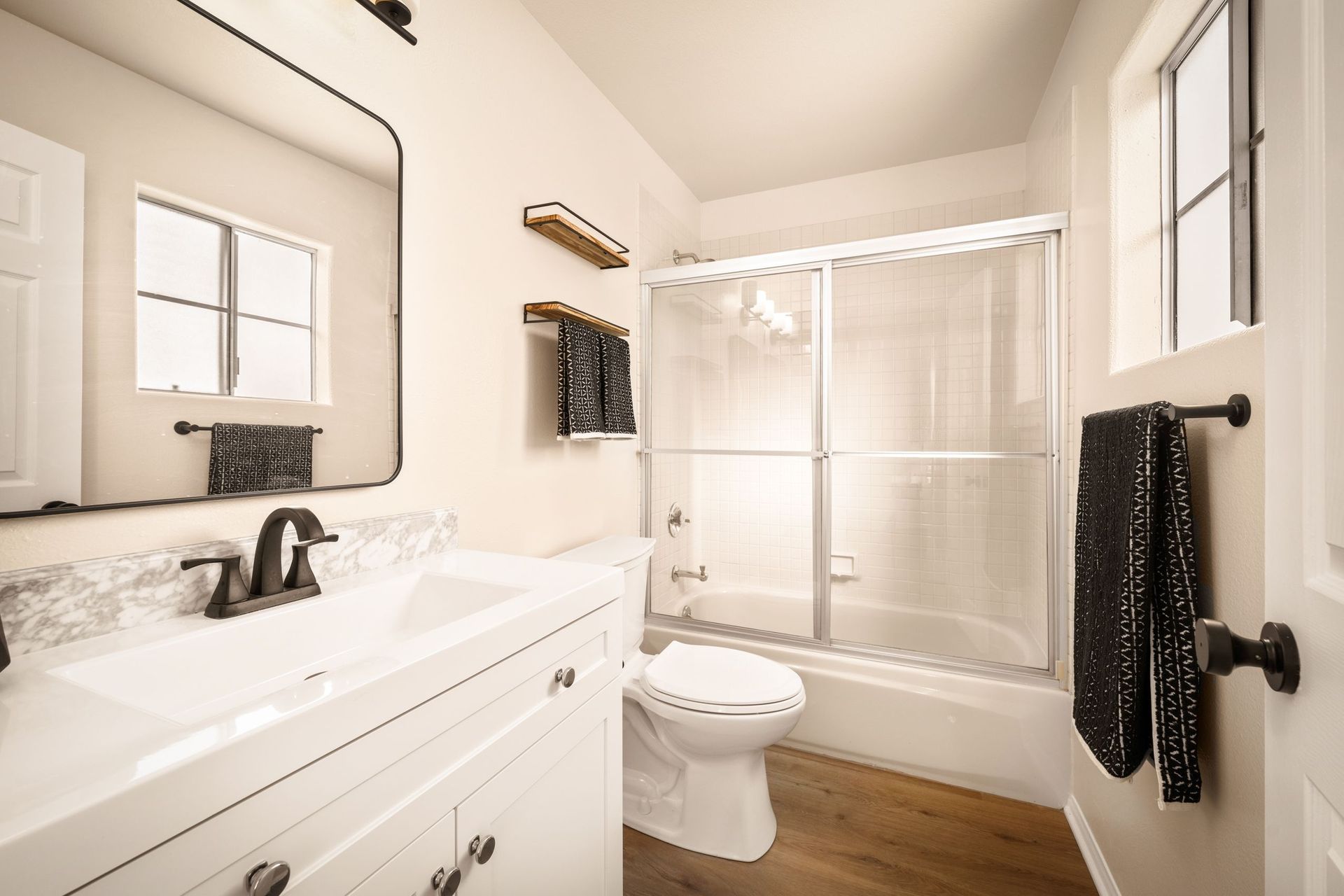
Bathrooms consistently top the list, and the reasons are both practical and financial. Seattle's older housing stock means a significant share of bathrooms are working with original tile from the 1970s, 1980s, or earlier, and those finishes show their age in ways that are hard to ignore. At the same time, many homeowners who locked in low mortgage rates in 2020 and 2021 have no interest in selling into a higher-rate market. That remodel-over-move mindset is channeling real investment dollars into existing spaces, and the bathroom is almost always the first room on the list. Industry platforms like Sweeten confirm that bathroom renovations remain among the highest-return remodel investments in 2026, and the demand pattern on the ground in Seattle reflects that clearly.
Kitchens rank closely behind. Backsplash replacement is often the entry point, but full floor tile installs, replacing worn vinyl or damaged hardwood, are increasingly common in homes being updated for resale or long-term livability. Kitchen tile work tends to involve more complex layout decisions than bathrooms, particularly around islands and transitions to adjacent flooring.
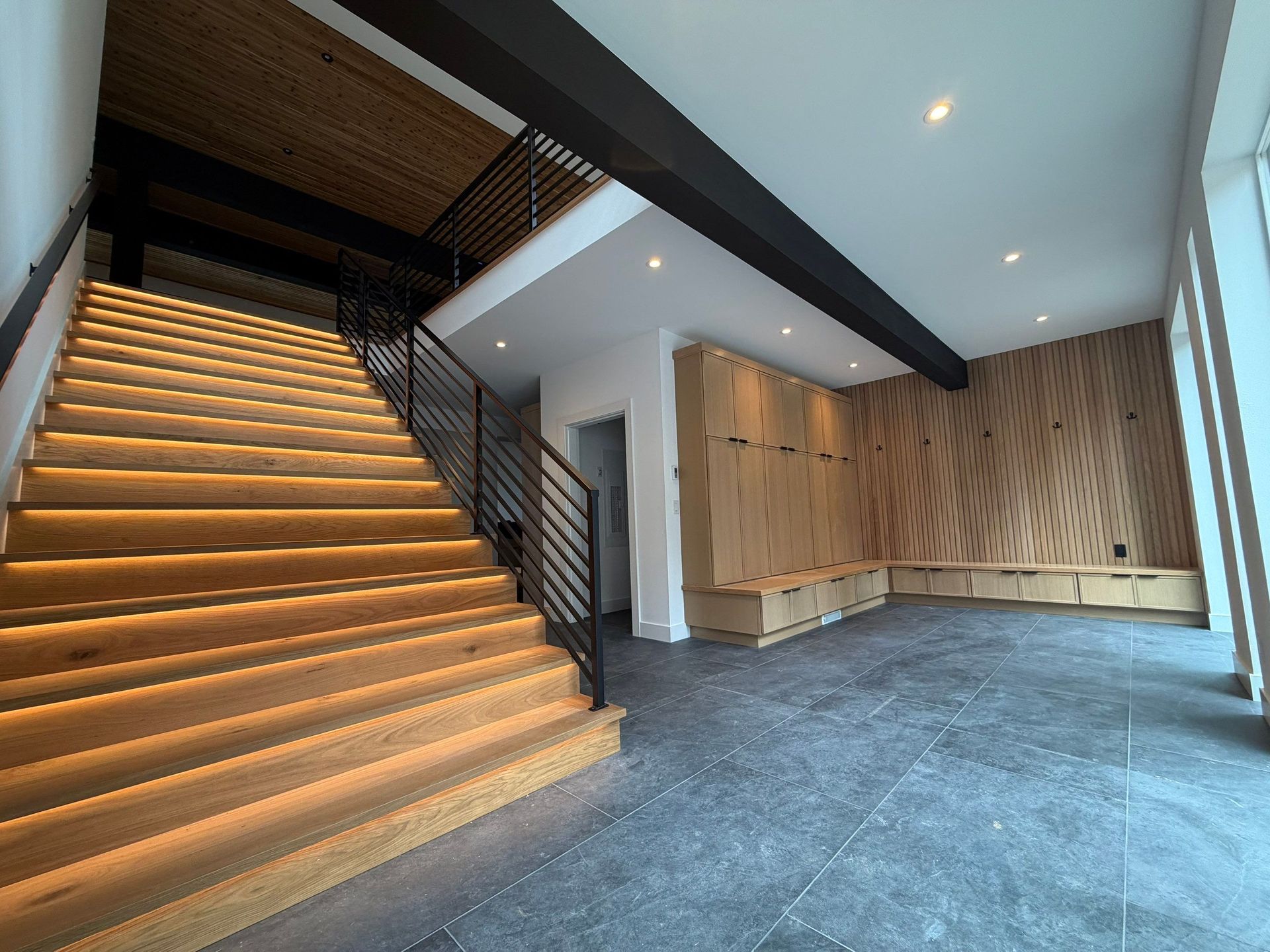
Mudrooms and entryways are a category that feels uniquely Pacific Northwest. Seattle averages more than 37 inches of rain annually, and the practical case for hard, sealed, easy-to-clean tile at every entry point is straightforward. This is not a luxury upgrade; it is a maintenance decision.
Laundry rooms and utility spaces are a growing segment, particularly in craftsman-era homes where original flooring has deteriorated past the point of repair. These projects are often smaller in square footage but require careful substrate assessment given the age of the framing beneath.
Outdoor tile on covered patios or exterior steps is viable in Seattle but demands frost-resistant materials and correct installation methods. The freeze-thaw cycle in the region is mild compared to colder climates, but it is not negligible, and the wrong product or improper bedding will fail. Projects in this category benefit from working with an installer who understands both material ratings and local climate conditions rather than applying a one-size approach.
Substrate and Installation Factors Specific to Pacific Northwest Homes
Getting the substrate right is the most consequential part of any tile installation in Seattle, and it's where projects succeed or fail long before a single tile is set.
1. Subfloor Deflection: The Standard Many Seattle Homes Don't Meet
Subfloor deflection is the leading cause of cracked tile and failed grout lines in the region's older housing stock. The Tile Council of North America requires that subfloors meet an L/360 deflection standard, meaning a joist span of 10 feet can flex no more than one-third of an inch under load. Seattle's Craftsman bungalows, Tudor revivals, and pre-war construction frequently feature joist spacing and subfloor assemblies that predate this standard entirely. Without sistering joists, adding a layer of plywood, or installing a compensating system, tile laid over these surfaces is under stress from day one. A professional assessment of deflection is not optional; it is the first step.
2. Uncoupling Membranes and Seismic Reality
Products like Schluter DITRA and comparable uncoupling membranes are particularly well-suited to Seattle's conditions for two reasons that rarely apply elsewhere in the same combination: seasonal wood movement in older subfloors and the region's seismic exposure. An uncoupling membrane allows the tile layer and subfloor to move independently, absorbing stress that would otherwise telegraph directly into grout joints and tile faces. These membranes add less than half an inch to total floor height and cost significantly less than repairing a failed installation. For Seattle homes sitting above the Cascadia Subduction Zone, that independent-movement capability is a practical safeguard against minor seismic differential movement, not just a theoretical benefit.
3. Wet Areas Demand Full Waterproofing Systems
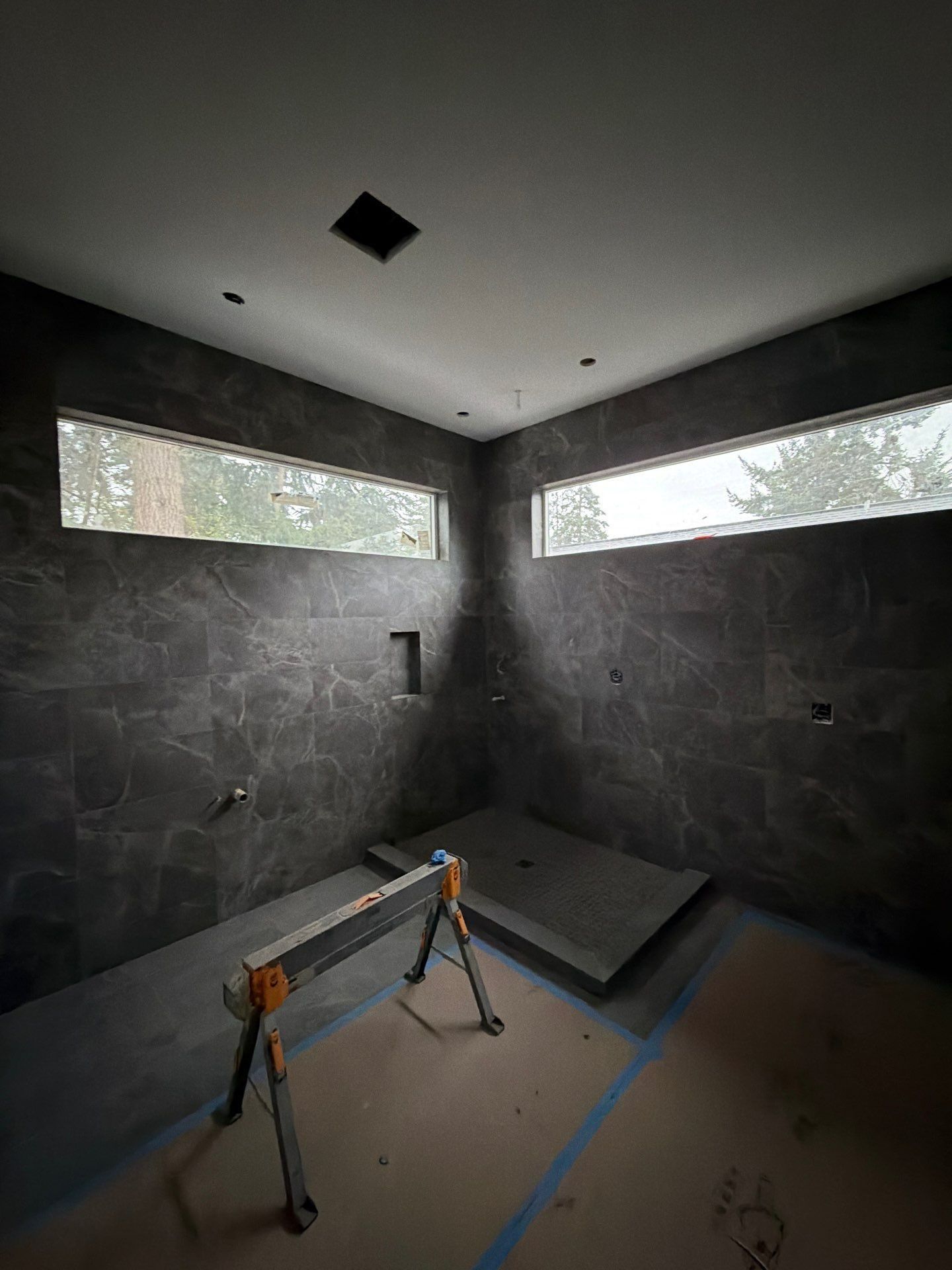
Seattle bathrooms require more than moisture-resistant backer board. Shower surrounds accumulate steam and direct water contact daily, and a simple moisture barrier is not rated for that sustained exposure. Full topical waterproofing systems, including liquid-applied membranes and properly taped seams, create a true waterproof plane behind the tile rather than merely slowing moisture transmission. With Seattle's humidity averaging 70 to 80 percent during winter months, the ambient moisture load on bathroom assemblies is already elevated before any shower is run.
4. Crawl Space Vapor: A Hidden Threat to Adhesive Performance
Crawl space foundations are common beneath Seattle's bungalow stock, and unencapsulated crawl spaces push moisture vapor upward through subfloor assemblies. Most thinset mortars require vapor emission levels below 3 pounds per 1,000 square feet per 24 hours for reliable bond integrity. Crawl spaces that lack proper vapor barriers and ventilation can exceed this threshold, compromising adhesive performance and shortening tile longevity regardless of how well the installation is executed above the subfloor.
5. Tile Selection Must Reflect Local Conditions
Large-format tiles amplify any substrate imperfection because they bridge more surface area; the TCNA flatness tolerance tightens to one-eighth inch in 24 inches for large-format installations, a standard that older Seattle subfloors rarely meet without preparation work. Format selection is a technical decision, not purely an aesthetic one. Equally important is slip resistance: highly polished porcelain and natural stone surfaces commonly fall below the ANSI A137.1 minimum Dynamic Coefficient of Friction of 0.42 required for wet floor areas. Seattle's wet season runs from October through April, and entryways in that climate need tiles rated for wet or commercial use, not showroom finishes selected without regard for what happens when a raincoat drips on them.
What to Look for When Hiring a Seattle Tile Contractor
Choosing the right contractor for tile installation in Seattle is a decision that deserves more scrutiny than most homeowners apply to it. The questions below are not formalities; they are the practical filters that separate accountable, experienced contractors from those who will create problems that outlast the project.
1. Verify Washington State Contractor Licensing Before You Sign Anything
Washington State requires all contractors to register with the Department of Labor and Industries, and that registration confirms the contractor is bonded and insured under state law. If something goes wrong on your project, that registration is the legal framework that protects you. Fortress Build & Finish holds active Washington State license FORTRBF756KA, verifiable directly through the L&I lookup tool. Always ask for a license number before any agreement is signed, and confirm it independently. Washington does not issue a tile-specific trade license the way it does for electricians or plumbers, which makes the general contractor registration check the primary, but not the only, vetting step available to homeowners.
2. Ask Whether Tile Work Is Done In-House or Subcontracted
Many general contractors function primarily as project managers, coordinating licensed subcontractors rather than employing their own crews. When tile work is subcontracted, quality control and communication pass through an additional layer, and assigning accountability for defects becomes significantly harder. Ask directly: are the people setting tile on my project employed by your company, or are they subcontractors? The answer changes the accountability structure of the entire engagement.
3. Ask How Long the Tile Team Has Been Together
The tile installation industry is facing a well-documented skilled installer shortage, with workforce training gaps producing real variation in workmanship quality across the market. In this environment, asking how long a contractor's core tile team has been working together is a legitimate and important vetting question. A stable, experienced in-house crew represents institutional knowledge that a rotating subcontractor pool cannot replicate.
4. The Estimator and the Installer Should Be Connected
A common failure point in contractor hiring is the handoff between assessment and execution. The person evaluating your substrate conditions, existing moisture problems, and subfloor deflection should have a direct relationship with the team that will actually set the tile. When a salesperson quotes the project and an unrelated crew executes it, critical details about site conditions get lost in translation. Ask specifically who will be on-site during the project assessment and whether that person will remain involved through installation.
5. Ask About Training Standards and Request Verifiable References
Industry credentials such as the TCAA's Trowel of Excellence and the Ceramic Tile Education Foundation's Advanced Certifications for Tile Installers represent formal, third-party quality benchmarks worth asking about. Even if a contractor does not hold these specific credentials, asking how their installers were trained, how long they have been doing tile work, and whether they can provide references with specific project addresses is reasonable due diligence. No credential replaces a direct conversation about training and a review of completed work.
6. Continuity of Accountability Is the Standard Worth Holding To
Fortress Build & Finish has performed tile installation in Seattle for more than 25 years with an in-house team. The same craftsmen who assess a project are the ones setting tile, which means the people responsible for evaluating your substrate conditions are directly accountable for the finished result. That continuity of responsibility is increasingly uncommon in a market trending toward project-management-style contracting, and it is worth asking for by name when evaluating any tile contractor.
Tile Trends Worth Knowing in 2026 (And What Actually Works in Seattle Homes)
Knowing which trends are worth acting on, and which require a second look given Seattle's specific housing realities, helps homeowners make better decisions before committing to materials and labor.
1. Large-Format Tile and Porcelain Slabs
Large-format tiles and porcelain slabs are the dominant aesthetic direction heading into 2026, prized for their ability to reduce grout lines and create a cleaner, more expansive visual surface. The appeal is straightforward: fewer seams mean less maintenance and a more seamless finish in kitchens and bathrooms. The installation reality in Seattle is more complicated. Most pre-1950s bungalows in neighborhoods like Ballard, Fremont, and Wallingford have subfloors that do not meet the flatness and stiffness standards these large panels demand. Handling oversized slabs also requires specific equipment and experienced installers; without both, cracking during or after installation is a genuine risk. For a closer look at what's driving the 2026 format shift, industry sources point to open-concept interiors and the growing preference for spa-like primary bathrooms as the primary drivers.
2. Radiant Floor Heating Under Tile
In-floor radiant heating paired with tile is gaining traction nationally, and it is a particularly well-suited upgrade for Seattle's cool, damp climate. A heated tile floor in a bathroom or mudroom converts one of the most common cold-weather frustrations into a genuine daily comfort. The system works especially well under porcelain and ceramic tile, which conduct and retain heat efficiently. The installation requires careful coordination between the heating system and the tile work, including appropriate uncoupling membranes and adhesive systems, making it a project where having a single experienced team handle both elements matters considerably.
3. Natural Stone vs. Porcelain: Understanding the Trade-Off
Natural stone remains a premium choice for Seattle homeowners investing in primary bathrooms and high-end kitchen floors. Marble, travertine, and limestone deliver warmth and texture that porcelain alternatives approximate but do not fully replicate. The trade-off is maintenance: natural stone requires periodic sealing, with marble typically needing attention annually and travertine every one to three years depending on use and exposure. Porcelain tile, including the marble-inspired large-format options that dominate 2026 design guides, requires no sealing and holds up better in damp conditions. For Seattle homeowners, where moisture infiltration is a consistent concern, understanding that distinction before selecting materials is essential rather than optional.
4. Textured and Matte Finishes Align Trend with Function
Matte and textured tile finishes are a practical requirement for Seattle entryways and mudrooms, where wet boots and tracked-in rain make slip resistance a priority over high-gloss aesthetics. The 2026 trend direction, which emphasizes tactile, organic surfaces and performance-oriented materials, happens to align directly with this functional need. Homeowners do not have to choose between what looks current and what works safely; the two point in the same direction this year.
5. What the Market Data Actually Signals
U.S. tile volume fell to 2.07 billion square feet in 2025, the lowest level since 2014, yet dollar values held above pandemic-era lows at $2.951 billion. That gap between volume and value tells a clear story: when homeowners invest in tile today, they are choosing better products rather than cheaper ones. For Seattle homeowners staying put amid high mortgage rates and weighing a bathroom or kitchen remodel, that dynamic is worth understanding. The investment case for quality tile has not weakened; the hesitation is about timing and confidence, not the category itself.
Realistic Cost and Timeline Expectations for Seattle Tile Work
Budget clarity is one of the most valuable things a homeowner can get before committing to a tile project, and in Seattle the numbers deserve honest framing rather than national averages that do not reflect regional labor rates, code requirements, or the realities of older housing stock.
Bathroom floor tile in the 50 to 80 square foot range that covers most Seattle bathrooms typically runs between $1,500 and $4,000 installed, with the spread driven by tile material selection, substrate condition, and layout complexity. A straightforward grid layout in ceramic tile will land toward the lower end. Porcelain in a diagonal or herringbone pattern adds measurable labor time because of the additional cuts, repositioning, and waste those layouts require, pushing costs toward the upper range. According to a detailed 2026 pricing guide for Seattle and Eastside tile installations, Seattle-area tile work runs 10 to 20 percent above national averages, driven by higher regional labor rates and stricter Pacific Northwest building code requirements.
Full shower surrounds carry a higher price range, typically $3,000 to $8,000 or more once waterproofing membranes, niches, curbs, and edge detailing are factored in. In older Seattle homes, that number can climb further when substrate remediation is required after walls are opened. Failed mortar beds, moisture-compromised backer board, and deteriorated subfloor sections are not rare findings in the city's pre-1980 housing stock, and they are not optional repairs. Skipping them voids the installation before the first tile is set.
Material costs in 2026 are carrying modest upward pressure from tariffs on imported porcelain and ceramic tile. The increases are not dramatic across all product lines, but they are real on certain imported categories. A contractor who addresses material pricing transparently, explains what is driving cost on a specific tile, and can suggest domestic sourcing alternatives when appropriate is signaling something worth noticing about how they work.
Timeline for a bathroom tile project typically runs three to seven business days of active installation depending on scope, but that window does not tell the complete story. Substrate repairs, waterproofing membrane cure times, and grout sealing each require waiting periods that homeowners need to build into their planning. A shower that takes four days to tile may not be usable for several additional days while materials cure properly. Compressing those cure windows is one of the cleaner ways a rushed installation fails ahead of schedule.
Finally, request an itemized written estimate that separates substrate preparation, tile material, setting materials, waterproofing system, and labor into distinct line items. When a project opens up and unexpected conditions appear behind a wall or under a floor, an itemized estimate makes it far easier to understand what changed, why the scope shifted, and what the adjustment actually costs. A single-number bid obscures all of that and leaves homeowners with no useful reference point when conditions change mid-project.
How Tile Fits Into a Larger Remodel With Fortress Build & Finish
Tile installation rarely exists as a standalone project, and that reality shapes how Fortress Build & Finish approaches every job. A bathroom remodel typically requires vanity carpentry, trim work, and plumbing rough-in coordination alongside the tile itself. When homeowners manage those trades separately, they absorb the scheduling friction personally, and accountability gaps appear the moment one trade's timeline affects another's start date. A full-service contractor eliminates that coordination layer entirely, keeping sequencing, tolerances, and finish quality under a single accountable party.
Fortress Build & Finish performs custom finish carpentry in-house alongside tile installation, which matters practically on any project where cabinetry, built-ins, or trim work intersects with tile scope. When the same team sets the shower tile and installs the vanity, fit tolerances are managed internally rather than negotiated between separate contractors arriving on separate schedules. That integration is especially relevant in kitchen projects where a backsplash, custom shelving, and new cabinetry need to land cleanly together.
For Seattle homes with documented or suspected water damage, Fortress's restoration background adds a layer that a tile-only contractor cannot replicate. The team can assess moisture-damaged substrates, remediate the underlying issue, and proceed directly into installation, rather than requiring the homeowner to coordinate between a separate restoration company and a tile contractor with no shared accountability.
The remodel-over-move trend driving Seattle kitchen budgets into the $75,000 to $200,000 range in 2026 has increased demand for projects that address multiple rooms at once. Fortress's cross-discipline capability means scoping a kitchen backsplash and a bathroom floor together is handled by one team, not two vendor relationships. Washington State bathroom remodels ranging from $31,000 to $132,000 represent investments where coordination failures are costly.
Twenty-five years in Seattle's residential and commercial remodeling market also means Fortress has worked across virtually every era of the city's housing stock. When a Craftsman bungalow presents non-plumb walls or a mid-century bathroom reveals a deteriorated mud-set pan, that experience translates directly into scope accuracy, honest timelines, and outcomes that hold.
Getting Your Seattle Tile Project Done Right
The decisions that determine whether a Seattle tile project succeeds are mostly made before installation begins. Keeping five priorities in sequence gives every project a stronger foundation.
Verify licensing and confirm an in-house team first. Before comparing bids on material costs or timelines, check that any contractor holds an active Washington State license and uses in-house installers rather than subcontractors. In-house teams mean a single accountability chain from estimate through grouting, which matters most when existing conditions reveal unexpected substrate work. Per the National Tile Authority's contractor selection criteria, workforce structure and licensing status are foundational vetting steps, not optional ones.
Build substrate assessment into the original scope. In Seattle homes built before 1980, subfloor conditions, legacy materials, and moisture readings should be evaluated before a project price is finalized, not after demolition starts. Treating substrate work as a contingency item is one of the most reliable ways to produce mid-project budget surprises.
Filter material trends through Seattle realities. Large-format tile and wood-look porcelain are both strong 2026 choices, but each selection should be evaluated against moisture exposure, subfloor flatness requirements, and long-term maintenance demands specific to Pacific Northwest conditions. Consulting a complete 2026 tile installation cost and materials guide helps frame realistic material and labor cost ranges before committing.
Request itemized written estimates. Line-item estimates make it possible to understand which costs are fixed and which are most likely to shift once existing conditions are visible. Lump-sum bids offer no flexibility when scope changes after demolition.
Fortress Build & Finish (WA License FORTRBF756KA) brings 25 years of Seattle-area experience and a fully in-house tile installation team to residential and commercial projects. Contact the team directly for a project assessment and itemized estimate.
Conclusion
Getting tile installation right in Seattle starts long before the first tile is set. The most important takeaways from this guide are simple: vet your installer carefully, ask the right questions upfront, choose materials suited to the Pacific Northwest climate, and never skip proper surface preparation. These steps are what separate a lasting result from one that cracks, shifts, or deteriorates within a few years.
Seattle's unique combination of moisture, aging home foundations, and competitive contractors makes due diligence non-negotiable. The homeowners who get the best outcomes are the ones who show up informed.
Ready to move forward? Use this guide as your checklist before you sign any contract. Take your time, compare your options, and trust the process. A well-installed tile job will serve your home beautifully for decades, and it all starts with making the right hire.
Recent Posts