What to Look for in a Residential Contractor in Seattle (And What Most Homeowners Overlook)
What to Look for in a Residential Contractor in Seattle (And What Most Homeowners Overlook)

Hiring the wrong contractor can turn your dream renovation into a financial nightmare. Most Seattle homeowners do their due diligence, checking licenses and reading a few reviews, but still end up with costly surprises midway through a project. The difference between a smooth remodel and a stressful ordeal often comes down to knowing which questions to ask before signing anything.
Finding a reliable residential contractor in Seattle is more nuanced than it might appear. This city's unique building codes, weather conditions, and permit requirements add layers of complexity that not every contractor is equipped to handle. Yet many homeowners focus almost entirely on price, overlooking factors that matter far more in the long run.
In this guide, you will find a clear breakdown of the most important things to evaluate when vetting contractors, including several criteria that tend to fly under the radar even for experienced homeowners. Whether you are planning a kitchen remodel, an addition, or a full home renovation, this list will help you make a confident, well-informed decision from the very start.
Why So Many Seattle Homeowners Are Remodeling Instead of Moving
The Seattle housing market in 2026 has created a defining pivot point for homeowners across the region. With 30-year mortgage rates projected around 6.3% and showing little sign of dramatic relief, homeowners who locked in sub-3% rates years ago are effectively anchored in place. The question has shifted decisively from "should we buy something bigger?" to "how do we make this home work better for us?" Homeowners choosing renovations over moves is no longer a fringe behavior; it is now the dominant response to a market that punishes buyers and rewards those who invest in what they already own.
The financial logic is especially compelling in Seattle. Elevated home values across King County mean that a well-executed kitchen overhaul or primary suite addition builds equity on a high baseline, without triggering a new mortgage at current rates. Nationally, kitchen remodels recoup between 72% and 96% of their cost in added home value; in a supply-constrained, high-demand market like Seattle, that math only improves. Home renovation financing in 2026 via a HELOC or home equity loan lets homeowners borrow against their existing equity while leaving their original mortgage rate untouched, a financial structure that moving simply cannot replicate.
Builders surveyed nationally in 2026 identified "more homeowners will choose to remodel instead of move" as one of the top five forces shaping residential construction, and Seattle amplifies that trend. Tight inventory, land scarcity, and persistent demand make finding an equivalent replacement home at a lower cost nearly impossible in most Seattle neighborhoods.
What this means practically is that homeowners who have reached the remodeling decision are not casual browsers. They are motivated, financially invested, and vetting contractors with real scrutiny before signing anything. The contractor you choose for a remodel-in-place project carries responsibility well beyond a single job; they become a long-term steward of your home's livability and resale value.
What 'Residential Contractor' Actually Covers
The label "residential contractor" covers far more ground than most homeowners expect. At its broadest, the term describes a licensed professional who can manage full-scale remodels and additions, custom finish carpentry, precision tile installation, and fire or water damage restoration, often under a single contract and a single roof. Washington State's contractor registration framework does not restrict general contractors to a narrow trade category, meaning a properly licensed, bonded, and insured firm can legally operate across all of these service areas simultaneously.
The problem is that most homeowners search in fragments. They run one search for a remodeling contractor, a separate search for a tile contractor, and a third search for a restoration specialist after water damage appears, never realizing a single qualified firm may already cover all three needs. That fragmented approach creates real coordination risk. When multiple vendors are managing overlapping scopes, sequencing failures become likely; a tile installation delayed by one sub can hold up countertops, cabinetry, and finish carpentry in a cascade that extends timelines and drives up costs.
The risk compounds sharply when restoration work transitions into remodeling. Water or fire damage rarely ends at cleanup. It frequently opens walls, exposes structural issues, and creates a natural entry point for a broader remodel. Managing that transition across two or three separate contractors introduces scheduling gaps, liability questions, and communication breakdowns that a single in-house team eliminates entirely.
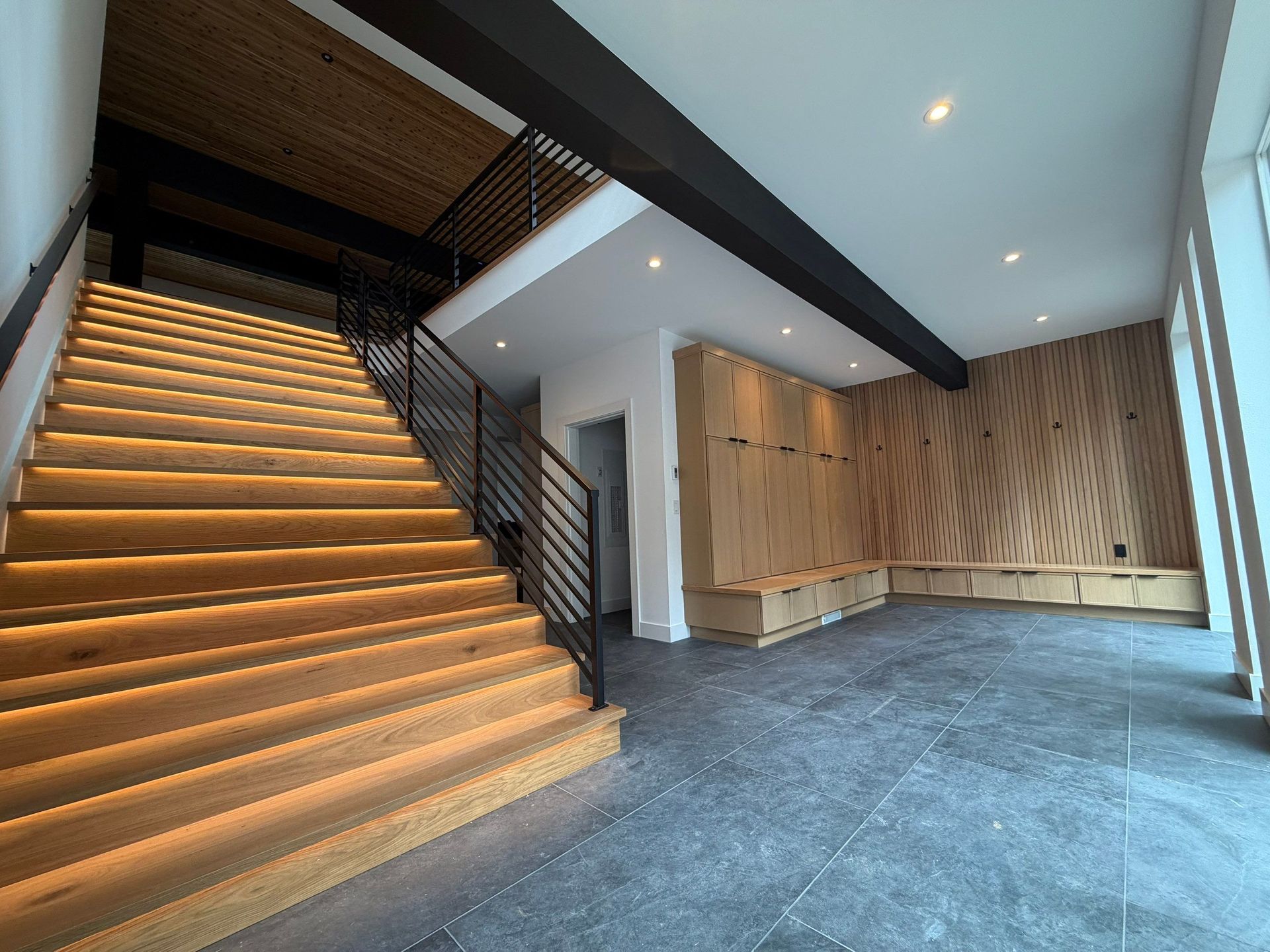
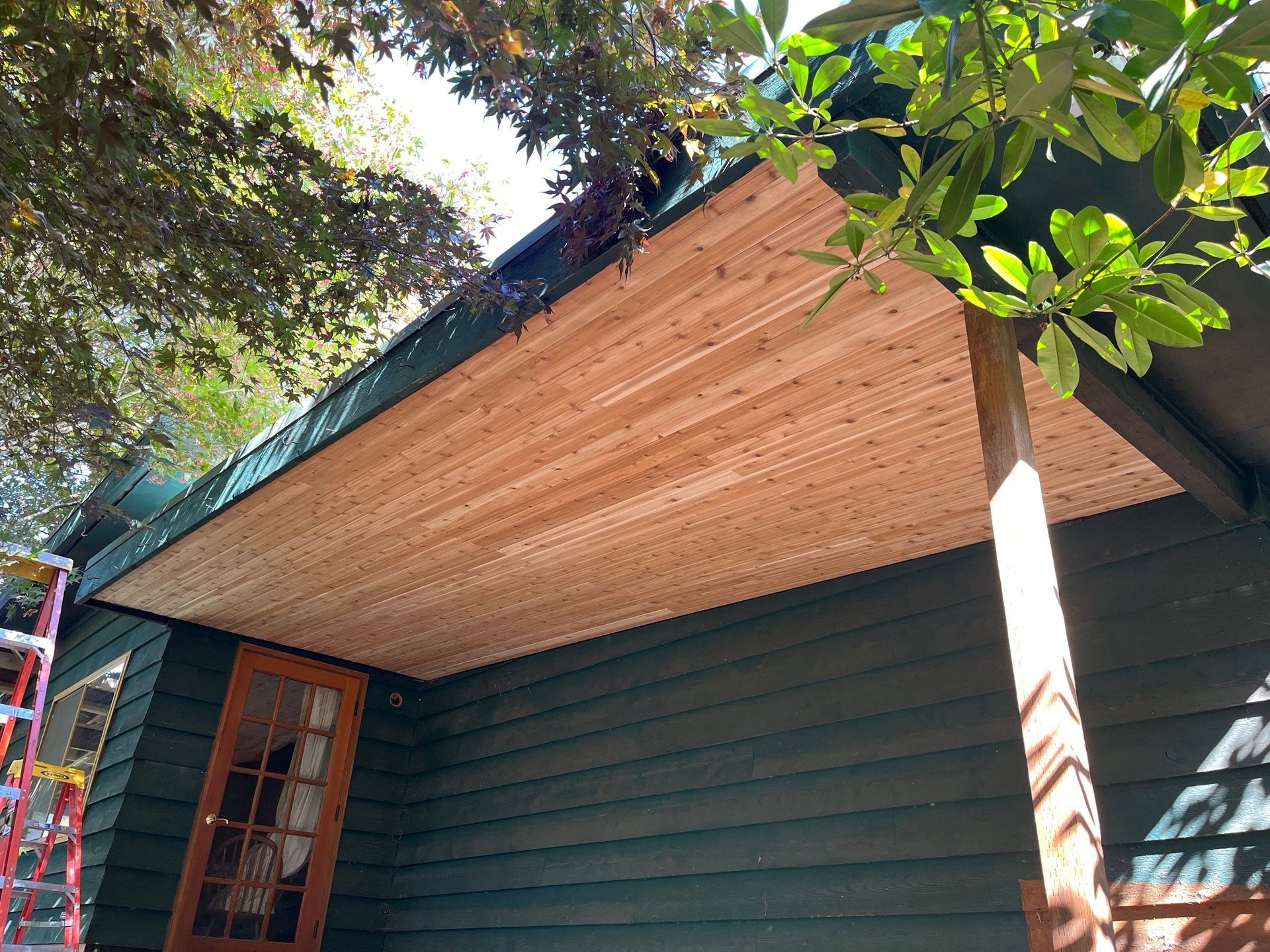
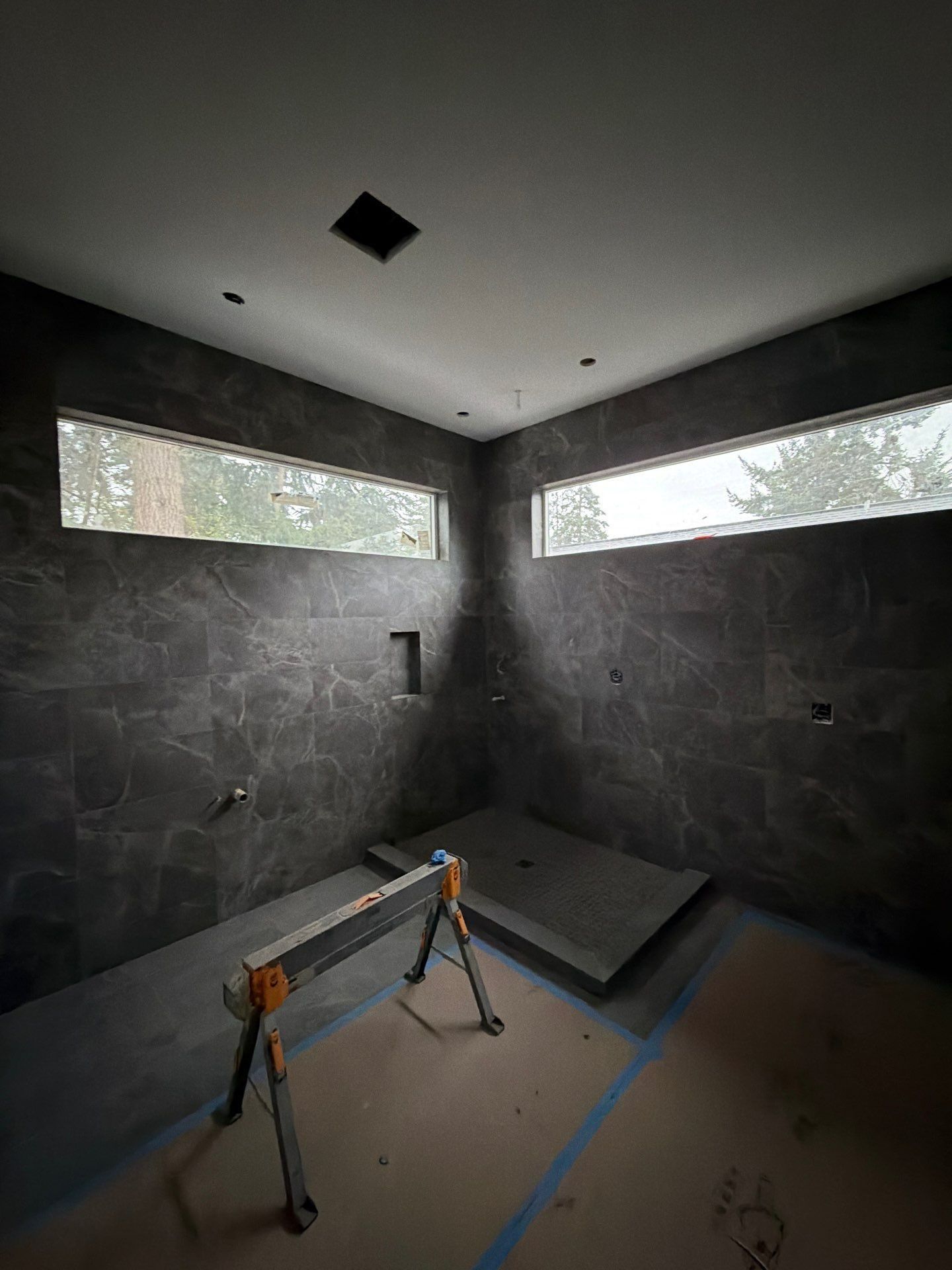
Fortress Build and Finish operates across all four service areas: residential and commercial remodeling, custom finish carpentry, tile installation, and fire and water damage restoration. Each area is handled in-house by the same team that assesses the project at the start, which means quality control does not transfer between vendors at critical handoff points.
Understanding the full scope of what a residential contractor can cover before you begin searching allows you to ask sharper questions and keep capable contractors on your list rather than filtering them out prematurely.
An Active Washington State Contractor's License
Washington State law requires every residential contractor to hold an active registration issued by the Department of Labor and Industries before performing any construction work. This is not a procedural nicety or an industry best practice; it is a legal prerequisite, and unlicensed operators routinely bypass it. Registration requires proof of liability insurance, a surety bond, and verified credentials confirming the contractor is qualified to perform the work being offered. These requirements exist specifically because they give homeowners a financial safety net when things go wrong.
An active license means the contractor has a verifiable identity on record with a state agency, has met financial responsibility standards, and can be held accountable through formal channels. Before signing any contract, homeowners should ask for a license number and confirm its status independently. Serious contractors provide that number without hesitation. Fortress Build and Finish operates under Washington L&I license number FORTRBF756KA, and any homeowner can verify that status in under two minutes using the L&I contractor lookup tool.
The risk of skipping this step is documented and growing. A recent L&I enforcement sweep targeted 95 contractors and found 33 operating without registration, each facing fines up to $1,000 per violation. In January 2026, Seattle's own contractor community flagged a surge of unlicensed operators advertising locally. Unlicensed contractors often quote lower prices precisely because they carry none of the overhead that licensing requires. Homeowners who hire them have limited legal recourse if work is abandoned or substandard. If problems arise with a licensed contractor, Washington's formal complaint and reporting process provides a structured path to resolution that simply does not exist with unlicensed operators.
Bonded and Insured: What It Actually Protects You From
A surety bond is not a credential that benefits the contractor. It is a financial guarantee filed specifically for the protection of the homeowner and, in Washington State, the employees working on a project. Under Chapter 18.27 of the Revised Code of Washington, general contractors must carry a $30,000 surety bond as a condition of licensure. If a contractor fails to complete work, violates contract terms, or causes qualifying damages, the bond provides a capped but meaningful financial recourse mechanism. The bond exists because the state recognizes that a contractor's word alone is not sufficient protection when significant money and property are at stake.
General liability insurance operates separately from bonding and covers a different category of risk. If a contractor's crew accidentally damages your flooring, breaks a window, or causes a water leak during a remodel, general liability insurance is what covers the repair cost. Washington State requires a minimum of $250,000 combined single limit coverage, though homeowners should evaluate whether that threshold is adequate relative to their project's total value. A large kitchen renovation or addition can easily exceed that figure, making it worth requesting documentation that confirms coverage limits before work begins. Seattle contractor insurance requirements cover both bonding and liability as a bundled compliance standard for this reason.
Workers' compensation is the coverage most homeowners overlook entirely. If a laborer is injured on your property and the contractor carries no workers' compensation insurance, you can face direct personal liability for medical costs and lost wages. Washington State mandates this coverage for contractors with employees, but enforcement gaps exist, particularly among smaller operators under financial pressure.
That financial pressure is real in 2026. Material cost inflation and labor shortages are straining smaller contractors industry-wide, increasing the practical likelihood that an undercapitalized operator could become unable to finish a project midway through. Bonding provides a buffer against exactly that scenario.
Always request a current certificate of insurance and bond confirmation before work begins, and verify the dates. Coverage lapses annually and a document from several months prior may not reflect active status. Washington State surety bond requirements and licensing records can be cross-referenced through the Department of Labor and Industries contractor lookup tool for real-time confirmation.
In-House Craft Versus Subcontracted Work
Many residential contractors operate primarily as project managers rather than craftsmen. They coordinate, schedule, and oversee, but the actual skilled labor gets routed to subcontractors sourced through the open market. Industry data shows remodelers typically operate at a subcontractor-to-employee ratio of approximately 2:1, and the subcontractors available to any given project depend on who is affordable and available at the time of booking, not who was described during the sales conversation. In Seattle's competitive construction market, where demand across trades remains high, that availability gap is real and consequential.
The quality problem is not theoretical. When finish carpentry and tile installation are performed in-house by the same team that assessed and scoped the project, there is no handoff between the person who made the promises and the person doing the work. Accountability is undivided. When contractors rely on subcontractors, quality control depends entirely on the GC's ability to vet and manage people whose primary loyalty is to their own business, not to the homeowner's outcome.
These trades are particularly unforgiving. A miter joint either fits or it does not. Tile lines are either straight or they are not. Unlike framing hidden behind drywall, finish carpentry and precision tile are permanent, visible, and tactile. Small differences in skill, patience, and attention produce dramatically different results, and the homeowner has no direct visibility into who is executing the work when it is subcontracted out.
Fortress Build and Finish performs finish carpentry and tile installation in-house, with the same crew involved from initial assessment through final installation. That continuity is a structural advantage, not a marketing distinction. When interviewing any residential contractor in Seattle, ask directly: who performs the finish work, company employees or subcontractors? The answer tells you exactly where quality control actually lives.
Local Tenure and Familiarity With Seattle's Housing Stock
Seattle's residential housing stock is not a single, uniform category. It is a layered archive of construction eras, each with its own structural logic, material choices, and characteristic failure points. Early 20th-century Craftsman bungalows, concentrated in neighborhoods like Ballard and Wallingford, were built with old-growth fir framing and often contain knob-and-tube wiring, plaster walls, and pier-and-beam foundations that behave very differently under remodel conditions than anything built after 1970. Post-war mid-century homes brought concrete block foundations, different insulation assumptions, and evolving code standards. Homes from the 1970s and 1980s introduced their own complications, including early synthetic materials, asbestos-containing insulation in some cases, and framing practices that predate current seismic requirements. More recent infill construction adds yet another layer, built to modern code but often squeezed onto lots that present their own access and coordination constraints.
A contractor who has worked exclusively in newer construction will encounter a 1940s Seattle home and face a diagnostic gap that no amount of general skill can close quickly. According to a Fox13 Seattle study on the city's aging housing inventory, the extent of Seattle's older housing stock is significant enough to warrant dedicated reporting. That reality is not background context; it is the daily working environment for any residential contractor operating here.
Twenty-five years of continuous work in one market also means navigating the same permit offices, the same Department of Construction and Inspections processes, and the same building inspectors across hundreds of projects. That repetition compresses timelines and reduces the unexpected in ways that are genuinely difficult to quantify but immediately visible in how a project runs. Fortress Build and Finish has built its track record precisely through that kind of accumulated, community-rooted experience. When a contractor can describe without hesitation what a 1940s Craftsman will reveal once walls open, that specificity is not a sales point; it is evidence of having been inside those structures repeatedly, across the full range of Seattle's residential housing market.
A Thorough Pre-Construction Assessment Process
Builders surveyed nationally in 2026 identify pre-construction scoping and assessment as the single most important competitive differentiator in residential contracting. It is also the phase where most project failures are actually seeded. Problems that surface mid-construction, including billing disputes, unexpected costs, and schedule overruns, rarely originate on the job site. They originate in an assessment that was too shallow to catch them.
A contractor who moves quickly from a first site visit to a signed contract is optimizing for their sales process, not your project outcome. Thorough scoping surfaces hidden conditions, realistic cost drivers, and sequencing decisions before they become expensive surprises. A ballpark estimate designed to win the bid is not a plan; it is a starting position that tends to shift once demolition begins.
What a legitimate pre-construction process actually includes is a site walk, a detailed written scope of work, clear material specifications, and an honest conversation about contingencies. Per industry guidance on the preconstruction phase, credible pre-construction services encompass feasibility analysis, design and scope development, detailed cost modeling, and permitting review. None of those steps can be compressed into a 20-minute walkthrough.
In Seattle's older housing stock, pre-construction assessment frequently uncovers conditions that directly affect both cost and sequencing: outdated electrical panels, non-standard framing from previous additions, or moisture intrusion that has been quietly progressing behind finished walls. As research on unforeseen construction conditions confirms, a recommended contingency reserve of 10 to 20 percent of total project budget exists precisely because these discoveries are predictable in older homes, even when their specifics are not. Experienced contractors build this discovery phase into their process rather than treating it as a billing dispute after the walls are open.
Before hiring any residential contractor in Seattle, ask directly how they handle scope changes and conditions discovered after work begins. A clear, documented answer, referencing written change orders, photographic documentation, and homeowner approval before any additional work proceeds, reflects professional maturity. A vague or dismissive answer is a meaningful warning about how the rest of the project will be managed.
Service Breadth: Why One Contractor Relationship Matters
Most homeowners accumulate contractor relationships the way they accumulate service providers generally: one at a time, reactively, as each new need surfaces. A remodeler for the kitchen. A separate tile installer for the bathroom. A finish carpenter for built-ins. A restoration company when a pipe fails or a fire damages the laundry room. Each relationship carries its own vetting cycle, its own communication rhythm, and its own accountability boundary. The cumulative overhead of managing those relationships across the life of a home is rarely calculated upfront, but it is real and it compounds.
The more consequential problem is accountability. When different teams handle different scopes, no single party owns the outcome of the whole. A tile installer who inherits a subfloor prepared by someone else has limited obligation when grout lines crack two years later. A finish carpenter working behind a remodeler's framing crew cannot be held responsible for levelness issues that were set before they arrived. Shared accountability requires shared scope, and shared scope requires a contractor with genuine in-house capability across trades.
Restoration scenarios make this fragmentation especially costly. When fire or water damage occurs, remediation and rebuild are frequently handled by separate companies operating under different insurance incentives. The remediation contractor is paid to document and remove. The rebuild contractor is paid to reconstruct. When those are different parties with no shared stake in the finished result, scope gaps and quality inconsistencies tend to fall on the homeowner to resolve.
Per the Buildertrend 2026 national builder survey, intentional design and quality of finish have become primary homeowner priorities, outranking simple square footage additions. Achieving that consistency across a full remodel is structurally harder when different crews handle different trades, because craft decisions in one area directly affect outcomes in another. A finish carpenter who also understands tile substrate knows what a floor transition requires before it is set.
Fortress Build and Finish covers residential remodeling, custom finish carpentry, tile installation, and fire and water damage restoration under one Washington State contractor's license (FORTRBF756KA) and one in-house team. For Seattle homeowners, that means fewer relationships to manage and a single point of accountability across every phase of a project.
A Track Record Built in the Community, Not Just Online
Portfolio photos and project galleries serve a genuine purpose during the early stages of evaluating a residential contractor in Seattle. They demonstrate aesthetic range, project scale, and finish quality. Online reviews add another layer, offering a broader sample of client sentiment. But neither source is the most reliable signal available to a homeowner conducting serious due diligence.
The most meaningful indicator is repeat business and neighbor referrals. A homeowner who returns for a second project, or who recommends a contractor to someone on their block, is staking their own credibility and relationship on that endorsement. That is structurally different from a curated gallery or a review profile that can be managed, inflated, or in some cases fabricated outright. Contractors who are primarily generating work through word-of-mouth signal something a polished website simply cannot replicate: clients willing to attach their names to the recommendation.
When vetting any residential contractor, ask directly whether they can connect you with past clients in your specific Seattle neighborhood or on a comparable project type. A contractor confident in their work will make that introduction without hesitation. One who deflects or offers only generic references should prompt follow-up questions.
Twenty-five years of continuous operation in a single city means a contractor's reputation is woven into the community itself. There is no rebranding away from a long local history. Fortress Build and Finish has operated across Seattle's neighborhoods for more than two decades, building a track record that accumulates only through consistent execution on real projects for real neighbors, not through marketing spend.
Choosing a Residential Contractor in Seattle: What to Do Next
The due diligence covered throughout this guide comes down to a short, repeatable checklist you can apply before signing anything.
- Verify the Washington State license at the L&I portal before your first meeting. The lookup takes under two minutes and surfaces active status, complaint history, and any violations on record. If a contractor hesitates to provide their license number, treat that as a definitive signal to move on.
- Request current proof of bonding and general liability insurance, and confirm workers' compensation coverage is in place. Call the insurer directly to verify the policy is active; do not rely on a certificate alone.
- Ask specifically who performs the finish carpentry and tile work. Employees or subcontractors is a simple question with significant implications for quality control. Also ask how the contractor handles undiscovered conditions, such as moisture intrusion or outdated wiring, found after work begins.
- If you are weighing remodeling in place against selling, request a pre-construction assessment from Fortress Build and Finish (license FORTRBF756KA) before committing to any scope or budget.
The variables that protect your investment are rarely the ones most homeowners examine first. Use this checklist before signing any contract, regardless of which residential contractor in Seattle you ultimately hire.
Conclusion
Hiring the right residential contractor in Seattle comes down to more than a quick license check and a price comparison. The homeowners who avoid costly surprises are the ones who dig deeper: verifying local permit experience, asking the right questions upfront, and prioritizing communication over convenience.
Seattle's unique building requirements and climate demand a contractor who truly knows this city. Beyond credentials, look for transparency, a clear contract, and a track record that holds up under scrutiny.
You now have the tools to make a smarter, more confident hiring decision. Before you sign anything, take time to apply these criteria and trust your instincts when something feels off.
The right contractor will not just complete your project. They will protect your investment, respect your home, and make the entire process feel manageable. Start your search with higher standards, and the results will follow.
Recent Posts