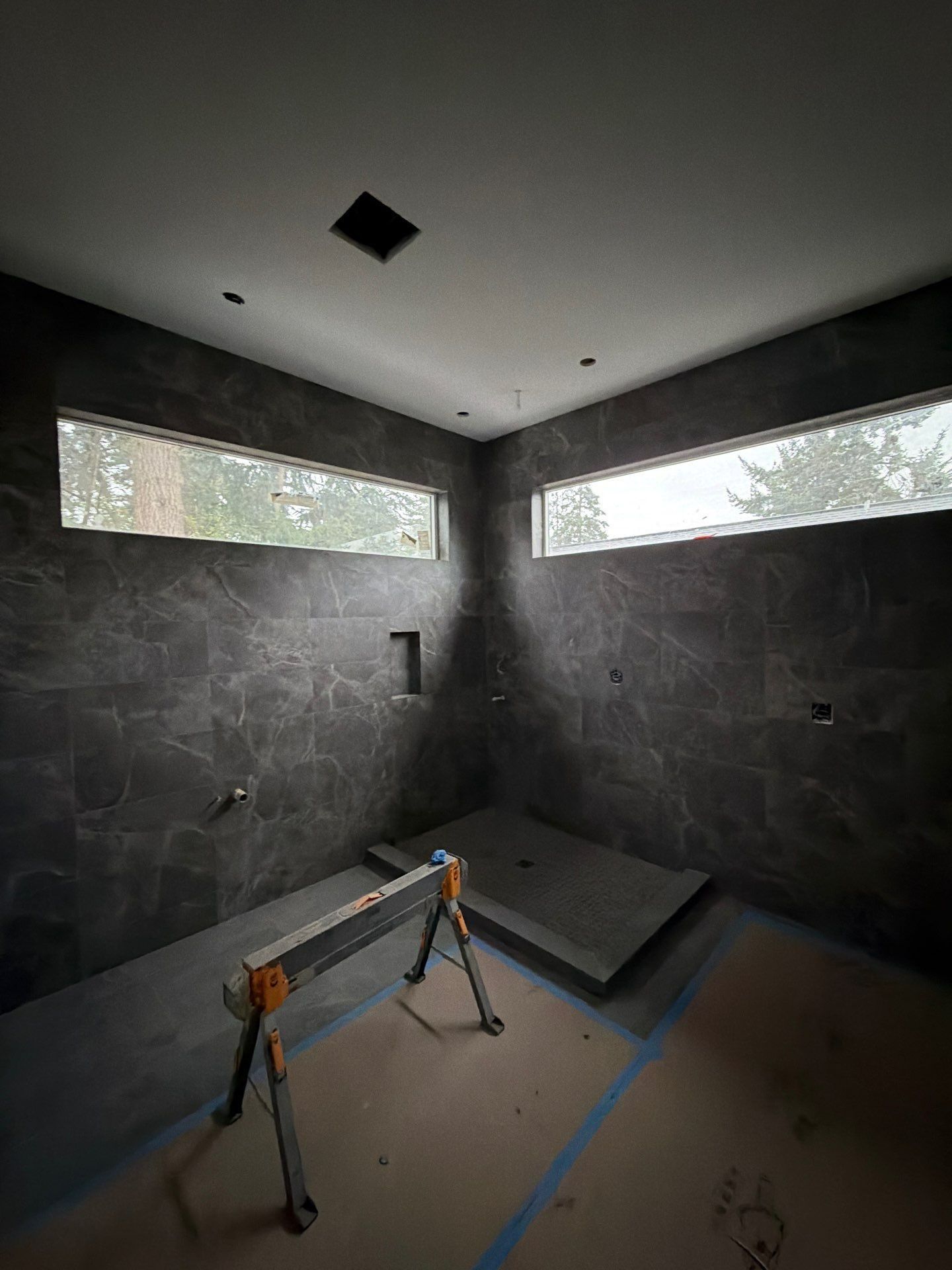
Code upgrade coverage
When you repair a damaged part of a house, current code may require work that goes beyond what was there before — a GFCI circuit, updated ventilation, a different waterproofing method, insulation to current standards.
Many homeowners policies include **Ordinance or Law coverage**, sometimes as an endorsement, that pays for code-required upgrades triggered by a covered repair. Coverage limits vary considerably and some policies exclude it entirely.
**Check your declarations page for Ordinance or Law coverage before assuming.** If you have it, code-triggered upgrades are a legitimate supplement item. If you don't, they're out of pocket, and it's worth knowing that at scoping rather than at final billing.
How to file a supplement that gets approved
**1. Stop and document before you cover anything.**
The moment something is discovered, photograph it in place with a reference for scale. Wide shot showing where it is in the room, then close shots showing the condition. Video helps. Once it's repaired, it's an assertion instead of evidence.
**2. Write it as line items, not a narrative.**
"Found rot" is not a supplement. "Remove and replace 14 LF of damaged bottom plate and 6 studs at north wall, R&R insulation, R&R drywall 32 SF, tape/float/texture, prime and paint" is. Use the same line-item structure the adjuster's estimate uses.
**3. Attach supporting evidence to each line.**
Photograph, and where relevant a supplier quote or subcontractor bid. Moisture readings. An inspection report.
**4. Submit before performing the work.**
This is the single most important procedural point. Work performed before approval is much harder to get paid for. If the schedule genuinely can't wait, document everything thoroughly and notify the adjuster in writing that you're proceeding and why.
**5. Ask for a written response on each line.**
Not "the supplement was partially approved." Which lines, at what amounts, and for denied lines, on what policy basis.
**6. Follow up in writing, weekly.**
Supplements stall. A short written status request each week keeps it moving and builds a record.
If a supplement is denied
**Ask for the specific reason,** in writing, citing the policy provision.
**Request a reinspection.** An adjuster who sees the condition in person often approves what they denied from a photograph.
**Escalate to a supervisor** or claims manager.
**Get an independent expert report** — an engineer, an industrial hygienist, a licensed specialist depending on the item. This carries real weight.
**Check your policy for an appraisal clause.** Many homeowners policies include one: each side appoints an appraiser, the two select an umpire, and the resulting decision resolves the amount of loss. It's faster and cheaper than litigation and it exists specifically for scope and value disputes.
**Consider a public adjuster** on a large or contested claim. They work for you rather than the carrier, typically for a percentage of the settlement. On a small claim the fee rarely makes sense; on a large one it often does.
**Washington's Office of the Insurance Commissioner** accepts consumer complaints and can be a useful escalation on a claim that's being handled unreasonably.
The timeline reality
Supplements take time. Two to six weeks from submission to decision is common, longer on a large or contested one.
**This is why it matters to have your reconstruction contractor on site during mitigation** — before the walls are closed. Discovering something in week two and supplementing then is a delay. Discovering it in week six, after other work has progressed, is a delay plus rework.
How Fortress Build & Finish handles supplements
We photograph before we touch anything, and we photograph again at every stage — before drywall, always. Supplements go in as line items matching the adjuster's format, with a photograph and a quote attached to each one, submitted before the work is performed.
We also keep the loss scope and any elective upgrades documented as separate columns from day one. That separation is what lets a carrier settle their portion cleanly, and it keeps a conversation about your new tile from complicating a conversation about their framing repair.
Frequently asked questions
What is a supplemental insurance claim?
A formal request to add scope and cost to an already-approved claim, typically because damage was found after demolition or the original scope missed items.
How long does an insurance supplement take?
Commonly two to six weeks from submission to decision, longer on large or contested supplements.
Can I file a supplement myself?
Yes, though most are prepared by the contractor because they require line-item detail and construction documentation. Either way, you should see everything that's submitted on your claim.
What if my supplement is denied?
Ask for the written reason and policy basis, request a reinspection, escalate to a supervisor, obtain an independent expert report, and check your policy for an appraisal clause.
Does insurance pay for code upgrades after damage?
Only if your policy includes Ordinance or Law coverage. Check your declarations page — limits vary widely and some policies exclude it.
---
*Fortress Build & Finish — (206) 426-2067 · Licensed, bonded and insured — License No. FORTRBF756KA · Serving
Seattle, Ballard, Magnolia, Queen Anne, West Seattle, Capitol Hill, Wallingford, Bellevue, Kirkland, Renton, Shoreline, Edmonds and the surrounding communities ·
fortressbuildfinish.com