Short answer
Bellevue permits are issued by the City of Bellevue Development Services Department. Nothing about Seattle's SDCI process applies — different application system, different fee schedule, different review timelines, different inspectors, and different critical-areas and tree retention rules. Ask any contractor you interview how many permits they have pulled in Bellevue specifically.
---
Why "it's all Seattle" is wrong
The Puget Sound region is a patchwork of separate permitting jurisdictions. Bellevue, Kirkland, Redmond, Mercer Island, Issaquah, Renton and Newcastle each run their own department, adopt their own local amendments to the state building code, and set their own review queues.
What that means in practice for a Bellevue homeowner:
- A permit number, a submittal packet and an inspection sequence from a Seattle job are not transferable knowledge
- Fees and review timelines have to be confirmed against Bellevue's current schedule, not estimated from another city's
- Bellevue's critical-areas regulations — steep slopes, streams, wetlands — cover a lot of Eastside ground
- Bellevue's tree retention and landscape requirements affect exterior work and additions in a way Seattle's generally do not
What typically needs a permit
The honest framing is not a list — it is a principle. **Permits follow structure, systems and safety.** Finishes generally do not require one; anything that changes how the building stands up, how water and power move through it, or how people get out of it generally does.
Work that normally requires a permit:
- Removing or altering a bearing wall, or any structural framing change
- Additions, bump-outs and dormers
- New or relocated plumbing and electrical
- A new or relocated window or door opening
- Converting unfinished space — a basement, a garage — into living space
- Decks above a certain height, and most exterior structures
- Re-roofing and siding in many cases
- An ADU or DADU
Work that generally does not:
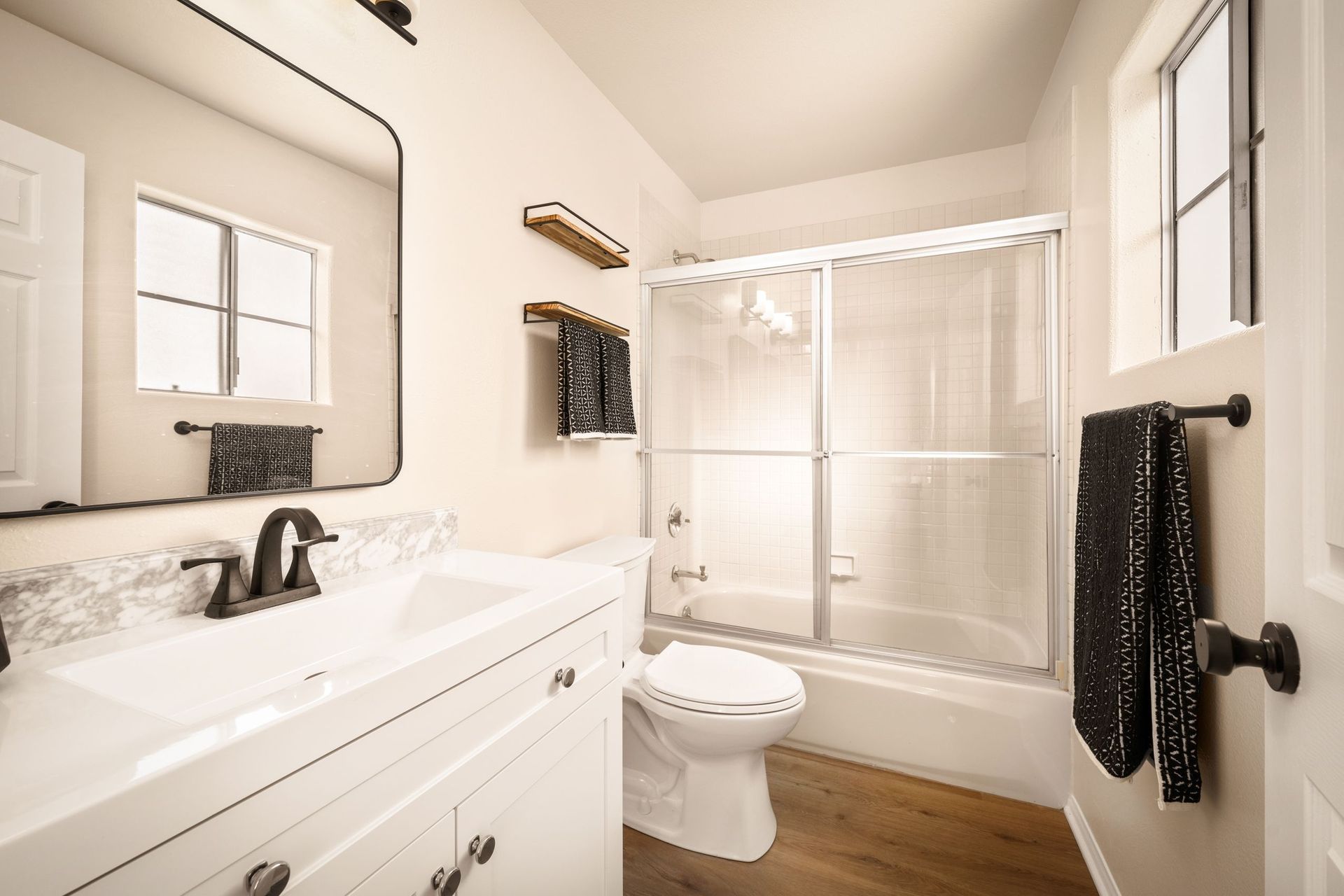
- Cabinet replacement in the same configuration
- Countertops, backsplash, flooring and tile as finish replacement
- Painting, trim and interior millwork
- Like-for-like fixture swaps with no plumbing relocation
The line between "finish" and "system" is where most disagreements happen, and it is exactly where you want a contractor who has asked the question before rather than guessed.
The tree and landscape factor
This is the requirement Seattle-based homeowners are most often surprised by. Bellevue regulates tree retention and landscaping, and on an addition, a detached structure or any work that changes the building footprint, the trees on your lot are part of the design problem rather than a background detail.
Design around it early. A plan that has to move eight feet after the arborist report is an expensive redraw.
Critical areas
Steep slopes, streams, wetlands and their buffers are common on the Eastside, and Bellevue's critical-areas regulations can substantially change what is buildable on a given lot. If your property backs onto a ravine, a creek or a greenbelt, find out what applies before you design an addition — not after.
What an owner is actually responsible for
**The permit should be pulled by the contractor doing the work.** If a contractor asks you to pull an owner-builder permit for work they are performing, that is a signal worth paying attention to: it shifts liability to you and it is often a sign of a licensing problem.
**Verify the license.** Washington contractor licenses are publicly searchable through the Department of Labor & Industries. Check the license number, the bond and the insurance, and check the name on the license against the name on the contract.
**Keep the final inspection.** An unfinaled permit shows up years later when you sell. Make sure the job closes out, not just finishes.
How Fortress Build & Finish handles Bellevue permits
We treat Bellevue as its own jurisdiction because it is. We confirm current requirements with Development Services rather than assuming what applied in Seattle last month applies here this month, and we pull permits in our own name for the work we perform.
Frequently asked questions
Who issues building permits in Bellevue?
The City of Bellevue Development Services Department. Seattle's SDCI has no role in a Bellevue project.
Do I need a permit to remodel a kitchen or bathroom in Bellevue?
Finish-level replacement generally does not require one. Moving plumbing or electrical, altering framing, or changing the layout generally does. Confirm the specific triggers with the city.
How long does Bellevue permit review take?
It varies by permit type, submittal completeness and the current queue. Ask the city for its posted review timelines at the time you apply rather than relying on a figure from a previous project.
Does Bellevue have tree retention requirements?
Yes. Bellevue has tree and landscape regulations that affect additions and exterior work. Confirm what applies to your lot before designing.
Should I pull the permit myself to save money?
No. An owner-builder permit moves liability for the work onto you. The contractor performing the work should pull the permit in their own name.
---
**Related reading.**
Remodeling in Bellevue: How Permits and Costs Differ From Seattle
*Fortress Build & Finish —
(206) 426-2067 · Licensed, bonded and insured — License No. FORTRBF756KA · Serving Bellevue, Kirkland, Redmond, Mercer Island, Issaquah, Renton and Seattle ·
fortressbuildfinish.com